AI-generated illustration — not a retailer product photo.
Patagonia’s documented repair and care approach offers a useful long-use signal, but it is not a substitute for checking the exact product, UK availability and current merchant terms before you order.
Patagonia Performance Apparel Review: What This Guide Covers
AI-generated illustration — not a retailer product photo.
This is an evidence-led guide for UK shoppers considering Patagonia clothing for outdoor activity, running, training or everyday wear. It focuses on what the brand publicly documents about repair, product care and the consumer-rights baseline for online purchases—not on personal wear testing, product rankings or promised fit results.
The central question is whether a garment is likely to make sense when long-term ownership matters alongside the initial choice. Patagonia’s Australian Worn Wear material presents repairability and keeping gear in use as part of its product-care proposition. Its care guidance also sets out straightforward laundering principles, including following the label in the garment. Those are meaningful service and maintenance signals, but they do not establish that every item will suit every activity, body shape or climate.
For UK buyers, the practical decision is therefore broader than “Is this a good brand?” Consider the intended use, product-specific sizing information, the care routine you are willing to follow, the repair route actually available to you, and the return terms shown at checkout. The UK legal baseline also matters: faulty goods have different protections from an online order you simply decide not to keep.
Durability Signals: Repair and Product Care
AI-generated illustration — not a retailer product photo.
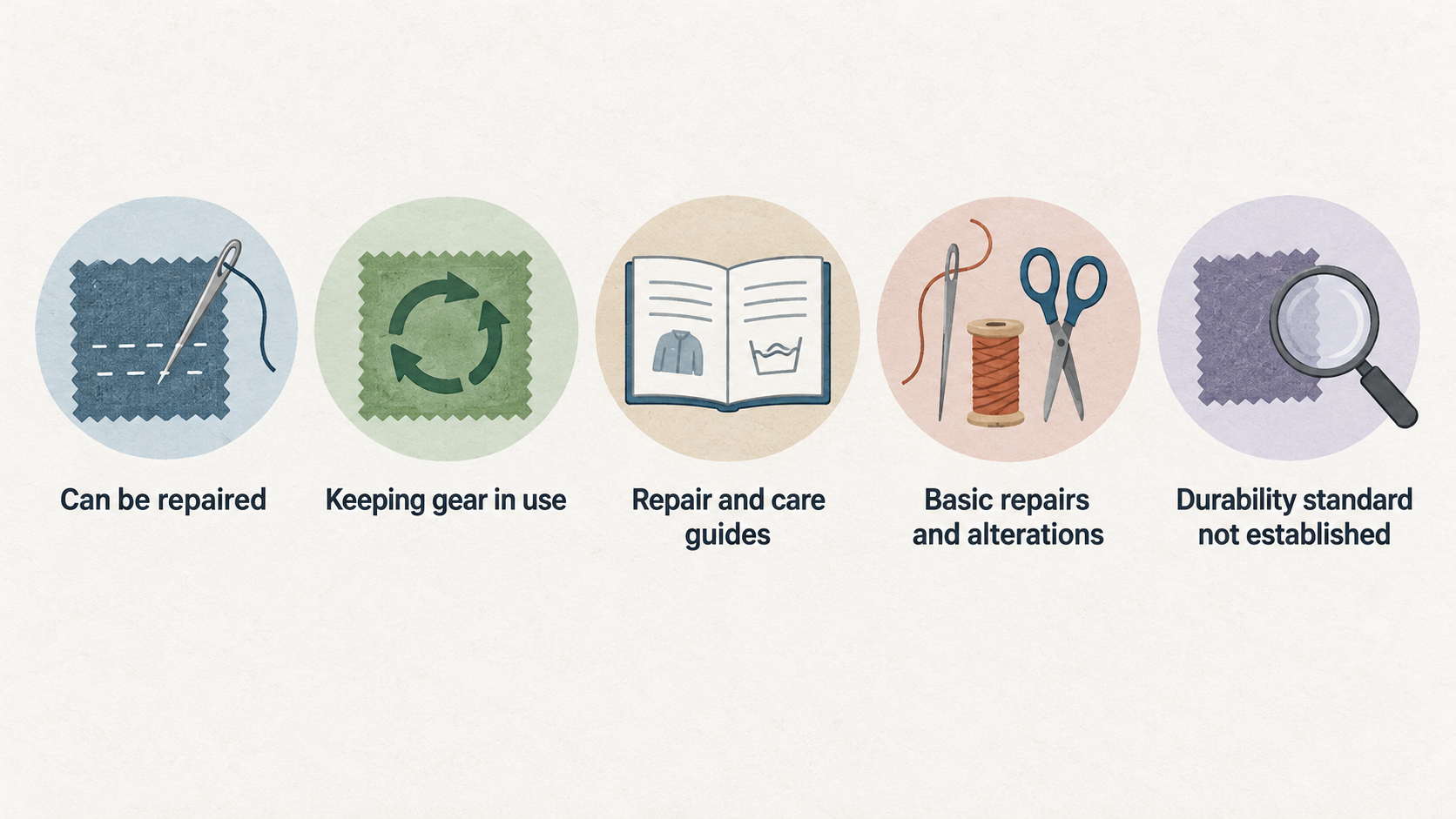
Patagonia’s Australian Worn Wear page says the company aims to make products that last for years and can be repaired. It also presents keeping gear in use as part of its approach and directs customers to repair and care guidance for Patagonia gear.
The page says Patagonia and iFixit have created more than 100 repair and care guides. It describes basic repairs and alterations on Patagonia gear at the Worn Wear Repair Hub in Patagonia Sydney, and says other Patagonia stores can assess and repair dropped-off or mailed gear, including wetsuits.
These Australian programme details do not establish that a particular jacket, base layer or pair of shorts will meet a particular durability standard in use. Fabric choice, construction, fit, abrasion exposure and care remain product- and activity-specific, so check the product page and care label before buying.
Care is part of the documented approach. Patagonia says washing instructions are printed on a white tag inside its garments and recommends following them. In general, it advises cold or warm water, mild laundry soap and line drying. It also advises against fabric conditioners and dryer sheets because residue can impair moisture-wicking, quick-dry, odour-control and DWR performance and reduce the longevity of spandex.
For UK buyers, the supplied sources document Australian repair information and general care guidance; they do not confirm UK repair eligibility, service availability or garment lifespan.
Repair Support: What UK Shoppers Should Verify
AI-generated illustration — not a retailer product photo.
Patagonia’s Australian Worn Wear information makes the repair proposition easy to understand in principle: customers can use DIY guidance, visit the Sydney repair hub for certain basic work, or take or mail gear to other Patagonia stores in Australia for assessment and repair. The page specifically mentions items such as damaged zips, rips, tears, buttons, snaps and pulls, and says wetsuits can be included in the store drop-off or mail-in route.
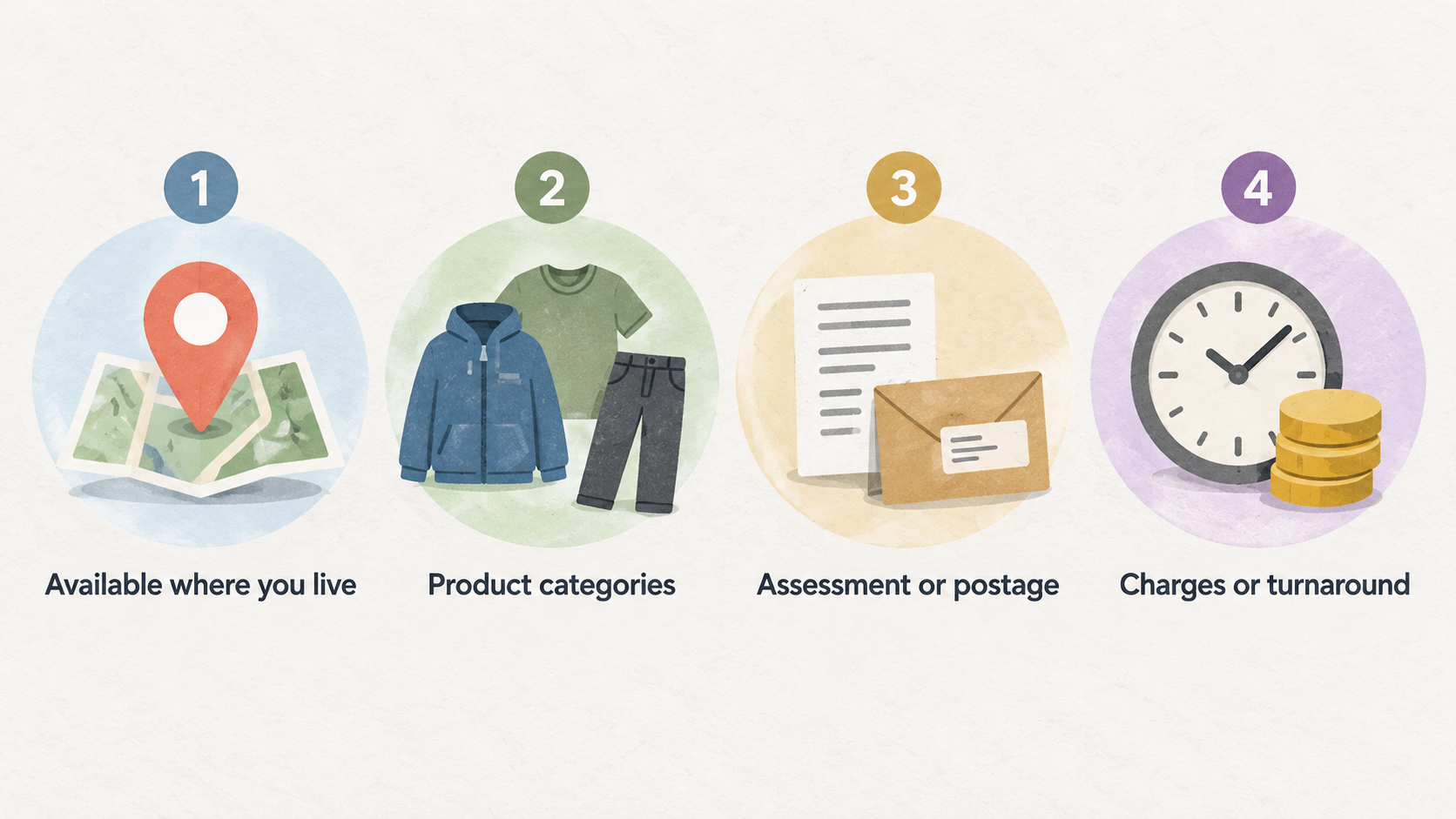
For a UK shopper, however, that page should not be treated as confirmation of an equivalent local service. It is merchant-provided information for Australia. Before relying on repair support as part of the purchase value, check the UK-facing Patagonia site or the seller’s current terms for four things: whether the service is available where you live, which product categories qualify, whether an assessment or postage is required, and what charges or turnaround expectations apply.
It is also sensible to distinguish a repair service from a warranty or from statutory rights. A service may help with an item that has suffered ordinary wear or accidental damage, while a fault may engage separate consumer protections. The exact route depends on the item, the seller and the circumstances.
If repair access is central to your decision, save the relevant product and policy pages before placing the order. That gives you a clearer record of the terms you saw, while avoiding assumptions based on a programme described for another territory.
Care Commitments Before You Buy
Patagonia’s care guidance is relatively low-fuss, but it still asks the owner to follow the garment label. The company says its washing instructions are printed on a white tag inside the garment and, in general, recommends cold or warm water with mild laundry soap followed by line drying. It also says its clothes are designed to be worn and washed without requiring dry cleaning.
That routine may suit buyers who are comfortable separating technical clothing from heavy-duty washes and who have space to line dry. It is less convenient if your normal laundry routine relies on high heat, strong treatments or automatic use of softener. Patagonia advises against fabric conditioners and dryer sheets because the waxy residue they leave can impair moisture-wicking and quick-dry performance, inhibit odour control, reduce spandex longevity and stop DWR from doing its job.
The useful pre-purchase question is not whether the care routine is difficult in the abstract, but whether it fits your household habits. Check the care label on the specific item once it arrives, especially for products with stretch fibres, water-repellent finishes or specialised fabrics. Treating the guidance as maintenance—not as a guarantee of performance—sets the right expectation.
Returns and Refunds: The UK Consumer-Rights Baseline
UK consumer law provides a baseline that is separate from any brand or retailer policy. According to GOV.UK, a seller must offer a full refund when an item is faulty, not as described or does not do what it is supposed to do. Rights are not removed simply because an item was bought in a sale.
For online, mail and telephone orders, GOV.UK states that customers generally have a limited right to cancel even when the item is not faulty. The customer must tell the seller within 14 days of receiving the item that they want to cancel, then has another 14 days to return it. The seller must refund within 14 days of receiving the item back. A reason is not required.
GOV.UK also says customers may handle an item as they would in a shop, such as trying it on or taking it out of the box. However, a seller may deduct from a refund if the item has been used or damaged. Standard delivery costs must also be refunded, though the seller only needs to refund the standard-delivery amount if a more expensive delivery option was chosen.
These are general legal protections, not a substitute for reading the merchant’s current terms. Before ordering, confirm who the seller is, the return address and process, any stated exceptions, and whether you are buying directly from Patagonia or through another retailer. Keep the order confirmation and return instructions.
How to Decide Before Ordering
Patagonia is most likely to appeal to a buyer who values a documented repair-and-care approach and is prepared to verify the local details before relying on it. Use this pre-order checklist to keep the decision grounded.
- Match the garment to the job. Start with the activity, weather exposure and layer you need. Do not assume that an outdoor, running or everyday item will perform identically across all uses.
- Check product-specific fit information. Review the product page, size guidance and retailer terms before ordering. A broad brand reputation cannot predict your preferred fit.
- Accept the care routine. Be ready to follow the garment’s white care label. Patagonia’s general guidance favours cold or warm washing with mild detergent and line drying, and cautions against softeners and dryer sheets.
- Verify repair access locally. The supplied Worn Wear information documents Australian routes, including store assessment, repair and some work on wetsuits. Confirm the current UK process, eligibility, price and timing before treating repair support as a deciding benefit.
- Check the return route before checkout. Confirm the merchant, time limits, return method and condition requirements. For an online order, the GOV.UK cancellation baseline is generally 14 days to notify the seller after receipt, followed by 14 days to send the item back.
The proposition is less compelling if you need a guaranteed local repair channel, a specific turnaround time or certainty about a product’s fit before purchase. In those cases, obtain confirmation from the UK seller first. The most useful outcome is not a blanket verdict, but a purchase decision that accounts for maintenance, service access and your legal options if the order is unsuitable.
Frequently Asked Questions
Does Patagonia offer repairs for customers in the UK?
The supplied evidence documents repair options through Patagonia’s Australian Worn Wear programme, including DIY guidance, a Sydney repair hub and assessment or repair through Australian stores. It does not confirm equivalent UK availability. Check Patagonia’s current UK-facing information or the seller’s terms for eligibility, pricing, postage and process before ordering.
How should Patagonia performance and outdoor garments be washed and cared for?
Patagonia says to follow the washing instructions on the white tag inside the garment. Its general guidance recommends cold or warm water, mild laundry soap and line drying. It advises against fabric conditioners and dryer sheets because they can leave residue that affects technical-fabric functions and spandex longevity.
Can I cancel an online clothing order if I change my mind?
GOV.UK says that customers buying online, by mail or by phone generally have 14 days after receiving an item to tell the seller they wish to cancel, followed by 14 days to return it. This is different from rights relating to faulty or misdescribed goods. Check the seller’s current terms and any applicable exceptions before purchase.
What should I check before relying on a repair or return option?
Confirm the seller, UK repair availability, eligible categories, assessment method, costs, turnaround and the merchant’s return instructions. Keep the product page, order confirmation and policy details. A documented Australian repair programme is a useful signal, but it does not by itself establish a UK service commitment.
Sources
Related reading
- Best performance athleisure brands in the UK: evidence-led choices for running, training and everyday wear
- Gymshark review: who its training apparel suits and what UK buyers should check
- On running apparel review: fit guidance, service and practical buying considerations
- When to buy workout clothes for better value: need, timing, total price and returns
Editorial information: About our editorial team · Read our editorial policy · Read our affiliate disclosure.