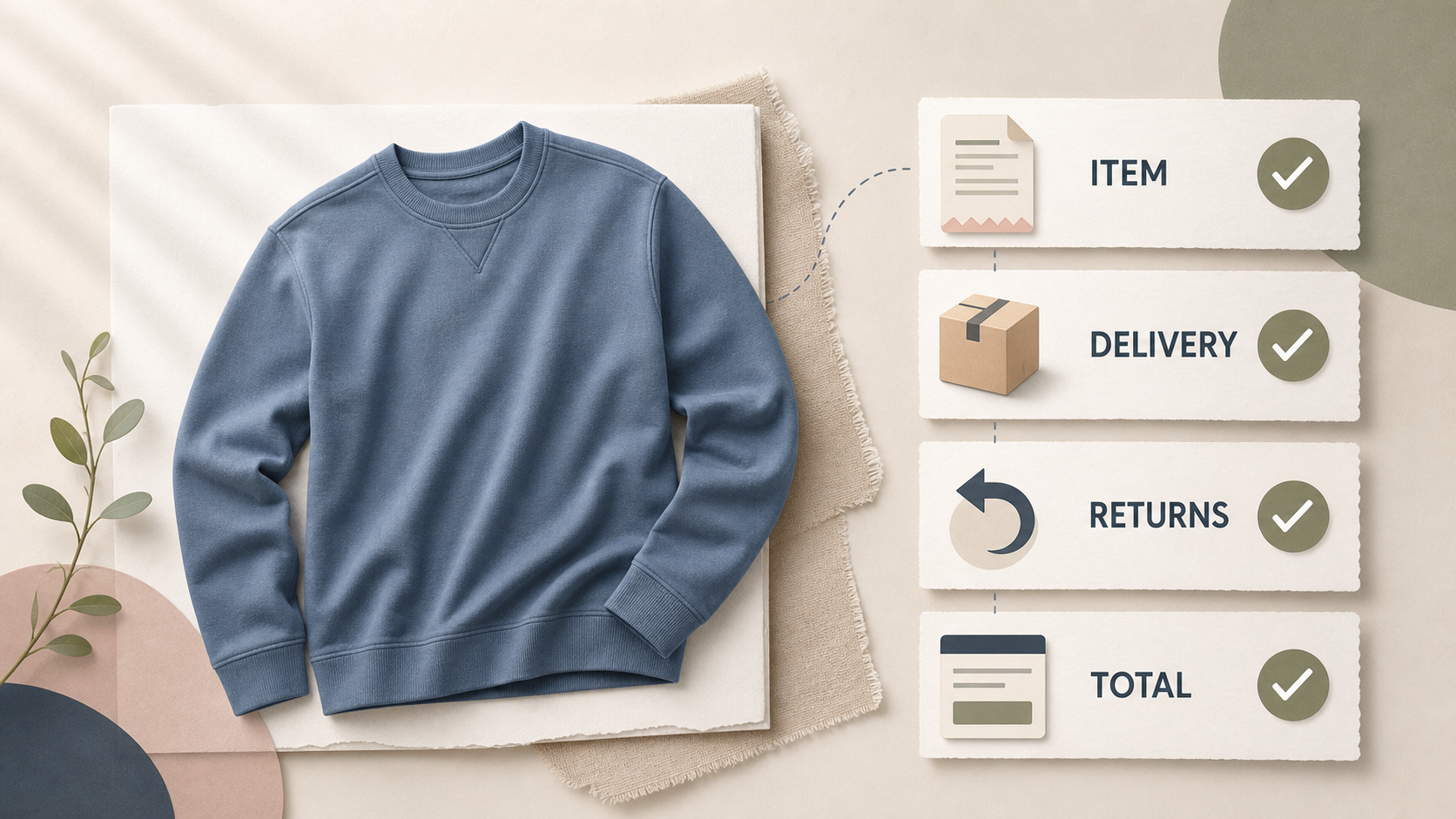
A promotion can be useful, but it is not a reason on its own to buy. Better value comes from choosing clothing you will use repeatedly, understanding the whole cost of the order, and knowing what happens if the fit or style is wrong. Use this guide before you add an item to your basket.
Start with the use you need to cover
AI-generated illustration — not a retailer product photo.
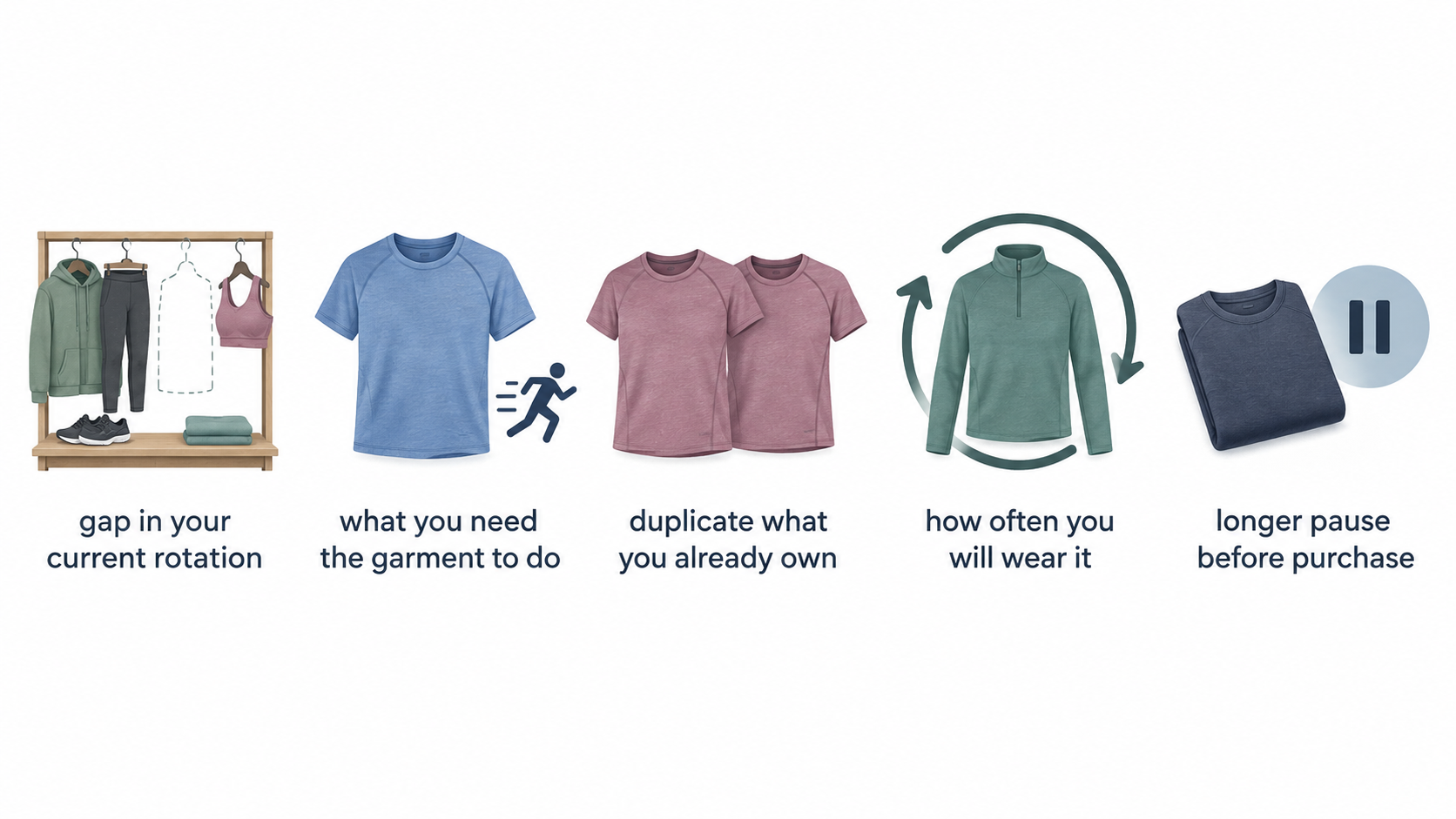
Begin with the gap in your current rotation, not the percentage shown beside a sale price. Ask what you need the garment to do: make regular runs more comfortable, give you a layer for outdoor sessions, replace a worn training top, or provide an everyday piece that can cope with frequent washing. A clear answer makes it easier to reject attractive items that would mostly duplicate what you already own.
Think about how often you will wear it, where you will use it and what you normally pair it with. If the item only works for a rare occasion, it may deserve a longer pause before purchase. If it solves a repeatable problem, compare the options that suit that job rather than browsing every discounted category.
For a useful starting point, group your needs by activity and then by fit. A running-focused guide can help you distinguish a regular run from a gym session, while a fit guide can help you decide whether you need more room, more coverage or a closer layer. The aim is not to build a perfect wardrobe; it is to make each purchase earn a place in the one you use.
Match the garment to the job
AI-generated illustration — not a retailer product photo.
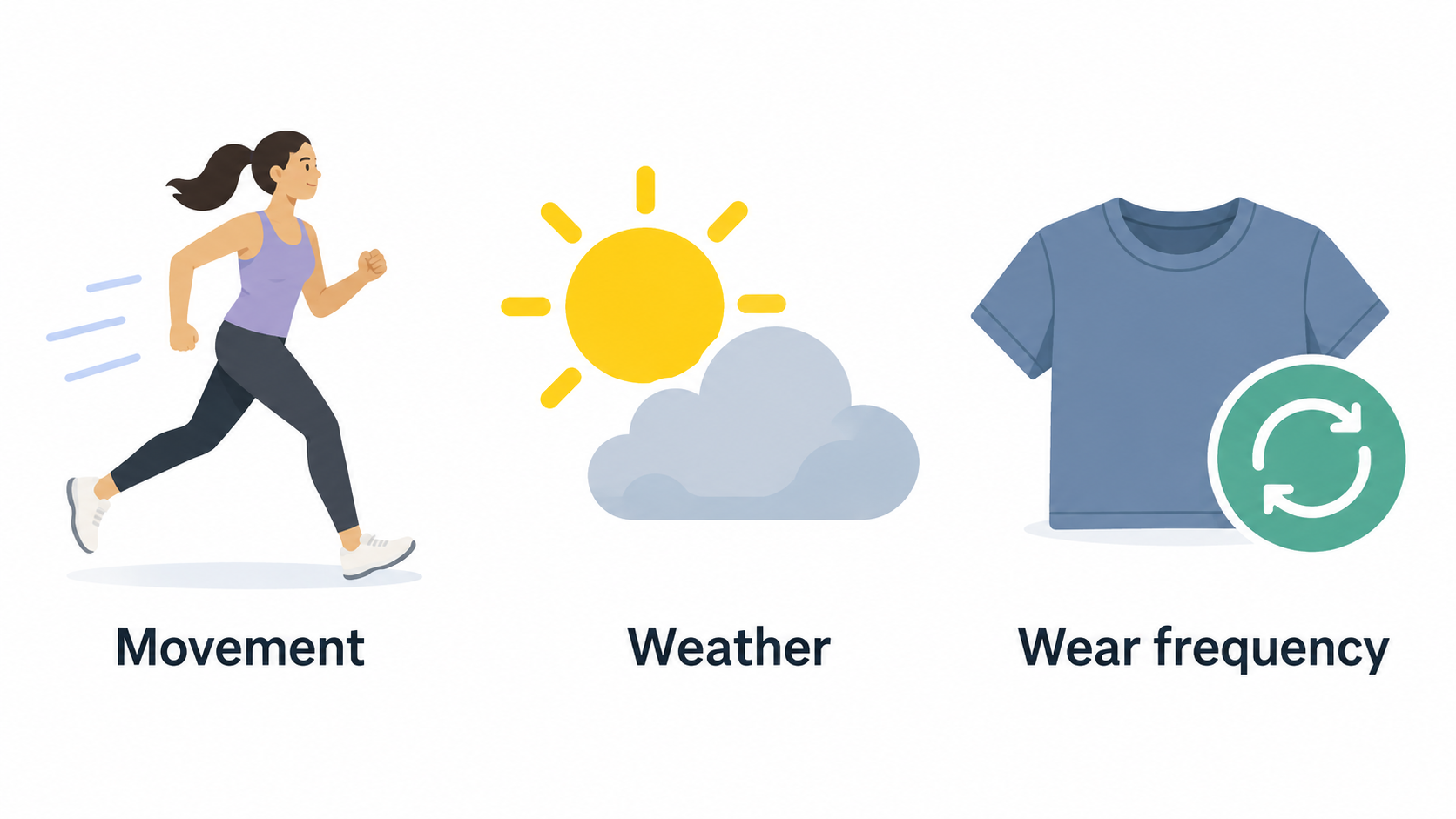
The same garment does not have to serve every activity. Start with the movement, weather and wear frequency you expect. Running may call for a lightweight layer that works with your usual route and season. Training may put more emphasis on the movements you repeat in class or at the gym. Outdoor sessions can add a need for layering and a plan for changing conditions. Everyday performance clothing may need to work across errands, travel and lower-intensity activity.
Then check the product information for practical details that matter to you: the stated fit, fabric composition, care instructions, pocket placement, length and any features you expect to use. These details are more helpful when compared with an item you already wear often. If you know a certain rise, sleeve length or fabric feel causes problems, use that knowledge to narrow the shortlist before ordering.
Frequency changes the value calculation too. A piece used several times a week can justify more comparison and a clearer care plan than an impulse purchase for an occasional session. That does not mean a higher-priced item is automatically better. It means the chosen item should suit the work you expect it to do, without asking it to solve needs you do not actually have.
Separate a discount from real savings
A lower ticket price is not necessarily a lower overall outlay. A discounted top that is too similar to something you already own, has an uncertain fit, or needs paid delivery may offer little practical value. The useful comparison is between the money you are likely to spend and the use you are likely to get—not between today’s label and a previous price alone.
Before treating an offer as a saving, list the alternatives: keep using what you have, buy one better-matched item later, or choose another retailer with a clearer delivered price. This can remove the false urgency that often comes with limited-time messaging. If the need remains after a day or two and the budget still works, you have a stronger reason to buy.
Price transparency guidance from the Competition and Markets Authority explains that pricing information should be clear and accurate, including mandatory fees, taxes and charges. It also addresses situations where costs are added as a customer moves through a transaction. For shoppers, the practical lesson is simple: do not stop at the product-page price. Continue far enough through checkout to see whether the order still makes sense.
Calculate the complete purchase price
Use a short total-cost check before you place an order. Start with the displayed product price, then add delivery and any charges that apply to your order. If you are buying an unfamiliar size or style, consider the possible cost of returning an unsuitable item as well. The result is not a forecast of every outcome; it is a more realistic picture of what the purchase could require.
A useful checklist is:
- the item price after any promotion;
- delivery cost and any qualifying threshold;
- applicable charges shown before payment;
- the likely return-postage cost, if the retailer does not cover it; and
- the cost of keeping an item that is unlikely to be worn.
This is especially important when comparing a single item with a multi-item order. Adding another garment solely to reach a delivery threshold can be worthwhile only if you would have bought it anyway. Otherwise, the apparent delivery saving may increase your total spend.
The CMA’s price-transparency guidance covers mandatory fees, taxes and charges, as well as pricing practices where component costs are presented separately. Check the final amount before payment and retain the order confirmation, so the price you agreed to is clear if you later need to review the purchase.
Check returns before you order
AI-generated generic editorial illustration — not a retailer product photo and does not depict the reviewed product or service. Make return eligibility and item-condition checks visible before purchase.
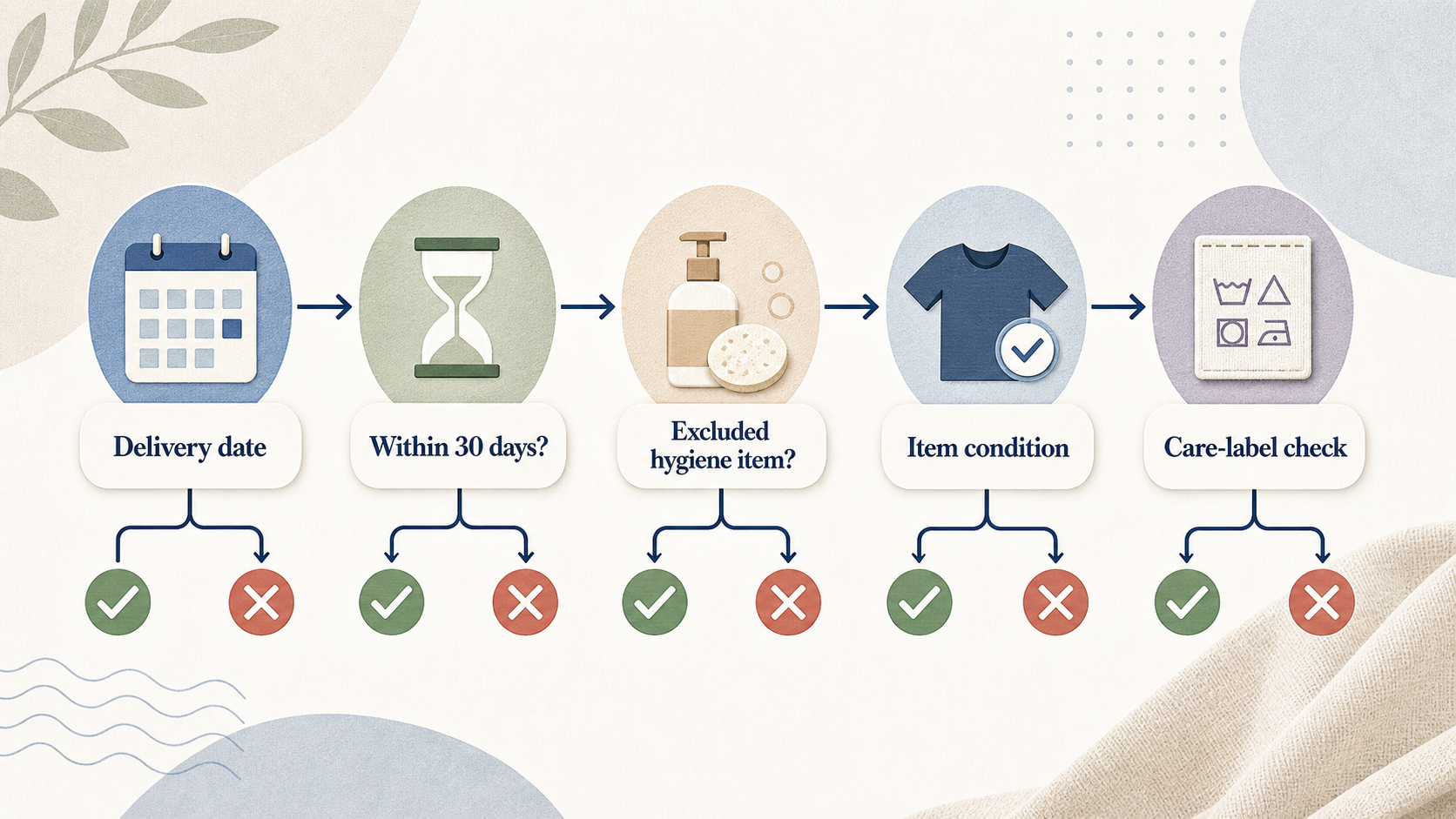 Return terms are part of the value decision, especially when you are trying a new fit or considering multiple sizes. Read the retailer’s current policy before ordering rather than assuming every seller uses the same window, exclusions or condition rules. Check when the return period starts, whether return postage is your responsibility, and what counts as an acceptable returned item.
Gymshark’s published policy is one retailer-specific example. For eligible purchases made through gymshark.com or its app, it states that customers have up to 30 days from delivery to return unwanted items in their original condition. The policy also lists exceptions, including underwear, swimwear, bottles and personalised items; socks must remain sealed in their original packaging. It says items must be unworn, unused and unwashed for a full refund, and that cutting out the small white care label prevents acceptance of a return.
These terms should not be treated as a rule for other UK retailers. Use them as a reminder to check the policy attached to the exact shop and item you are considering. If the exclusions or condition requirements make a speculative order uncomfortable, compare locally available options or wait until you can make a more confident choice.
Use timing to support a planned purchase
Good timing supports a decision you have already made; it should not create the decision for you. Keep a short list of items that would solve a known need, along with an upper budget and preferred features. When a promotion appears, you can compare it against that list instead of starting from the deal itself.
Seasonal changes can make this easier. Before a colder period, check whether your regular activity needs an additional layer. Before warmer weather, review whether the clothing you already own still covers your usual sessions. This is planning, not a promise that a particular sale will be best. Prices, stock and delivery terms can change, so judge the offer that is actually available at checkout.
A capsule approach can also reduce duplicate buying. Choose a few garments that work together for the activities you repeat, then identify the real gaps only after using them. If an item remains on your list after you have checked your wardrobe, your budget and its complete purchase price, a live promotion may be a helpful opportunity. If not, waiting preserves both money and choice.
Use a five-step value check
Use this sequence before buying:
- Define the activity and repeatable use the item must cover.
- Check what you already own, including similar items that are still serviceable.
- Calculate the full checkout cost, not just the advertised item price.
- Read the retailer’s current return conditions and exclusions for the item.
- Review product information and care requirements, then decide whether to buy now or wait.
The final step is deliberately modest. Product descriptions and care labels can help you set expectations about fit, fabric and upkeep, but they are not independent testing. Consider whether you can follow the stated care requirements and whether the garment appears suitable for the use you identified at the start.
If one part of the check remains unclear—such as the final delivery charge, your size, or return eligibility—pause before paying. Waiting can be the better value decision when it prevents a duplicate purchase, an unsuitable fit or a return you would not be comfortable making.
Frequently Asked Questions
Should I buy workout clothes in a sale if I do not need them yet?
Usually, wait until you can name the activity or repeatable use the item will cover. A sale can reduce the item price, but it does not remove delivery costs, fit uncertainty or the cost of keeping something unworn. Keep a planned list and buy when the need, budget and total checkout price align.
What costs should I include when comparing sportswear prices online?
Include the displayed item price, delivery, applicable charges shown during checkout and any likely return-postage cost. The CMA’s guidance highlights the importance of clear pricing information that includes mandatory fees, taxes and charges. Compare the final amount you would pay, not only the product-page figure.
Can I return workout clothes after trying them on?
That depends on the retailer and the item. Gymshark states that eligible online purchases may be returned within 30 days of delivery if they meet its condition requirements, while hygiene-related and personalised-item exclusions apply. Check the current policy for the retailer you are using before ordering, and keep the item in returnable condition if you may send it back.
How can I reduce the risk of buying the wrong size online?
Compare the retailer’s sizing information with a garment you already wear comfortably, read the stated fit and product details, and check return conditions before ordering. Avoid removing labels, washing the item or altering it until you are sure it is suitable, because retailer condition rules can affect return eligibility.
Use the same process whenever a deal catches your eye: confirm the need, check the complete price and make sure the return terms fit your level of confidence before you buy.
Sources
Related reading
- Patagonia performance apparel review: repair support, practical strengths and buying limits
- On running apparel review: fit guidance, service and practical buying considerations
- How workout clothes should fit, feel and perform before you commit
- How to spot genuine sportswear deals: total price, reference claims, returns and quality checks
Editorial information: About our editorial team · Read our editorial policy · Read our affiliate disclosure.