Choosing performance clothing is less about finding one universally “correct” fit and more about matching a garment to what you will actually do in it. Start with the activity, compare your measurements with the relevant size guidance, then assess movement, layering, care and return risk before the item becomes part of your regular rotation.
This approach keeps the decision evidence-led. Published size information and service terms can inform your choice; they do not, on their own, prove long-term comfort, durability or sport-specific performance for every wearer.
Start with the activity and use case
AI-generated illustration — not a retailer product photo.
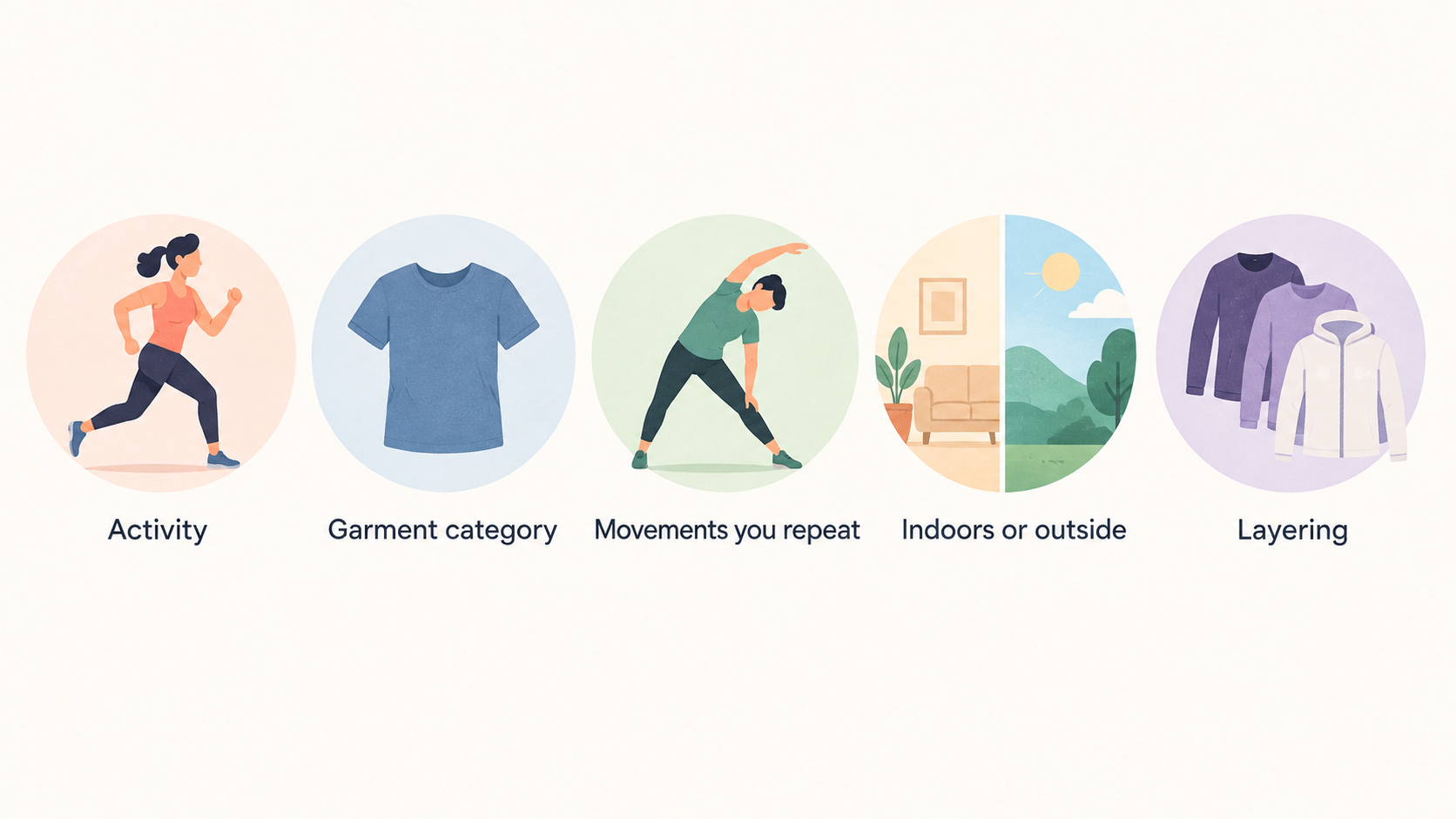
Define the job before judging the fit. A top for easy runs, a bra for gym sessions, tights for cold outdoor training and a sweatshirt for everyday wear may all need different amounts of coverage, support, room and layering capacity. Think about the movements you repeat, whether you train indoors or outside, what you normally wear underneath, and whether the item must work alone or as part of a system.
Nike’s UK navigation separates clothing by sports including Running, Football, Training and Gym, and Tennis, while also separating clothing categories such as tops, shorts, tights, jackets and sports bras. That is a useful starting point: begin with the activity and garment category rather than assuming that one preferred size or silhouette will suit every purpose. Nike UK product advice and navigation
Use the product description to identify what is actually stated, but keep a boundary around what is not. A manufacturer can describe a range or category; you should still decide whether the cut, layering plan and return option make it sensible for your own intended use. If you cannot assess those points before wearing it regularly, treat the purchase as less certain.
For activity-specific choices, see our running clothing selection guide.
Use measurements before relying on a size label
AI-generated illustration — not a retailer product photo.
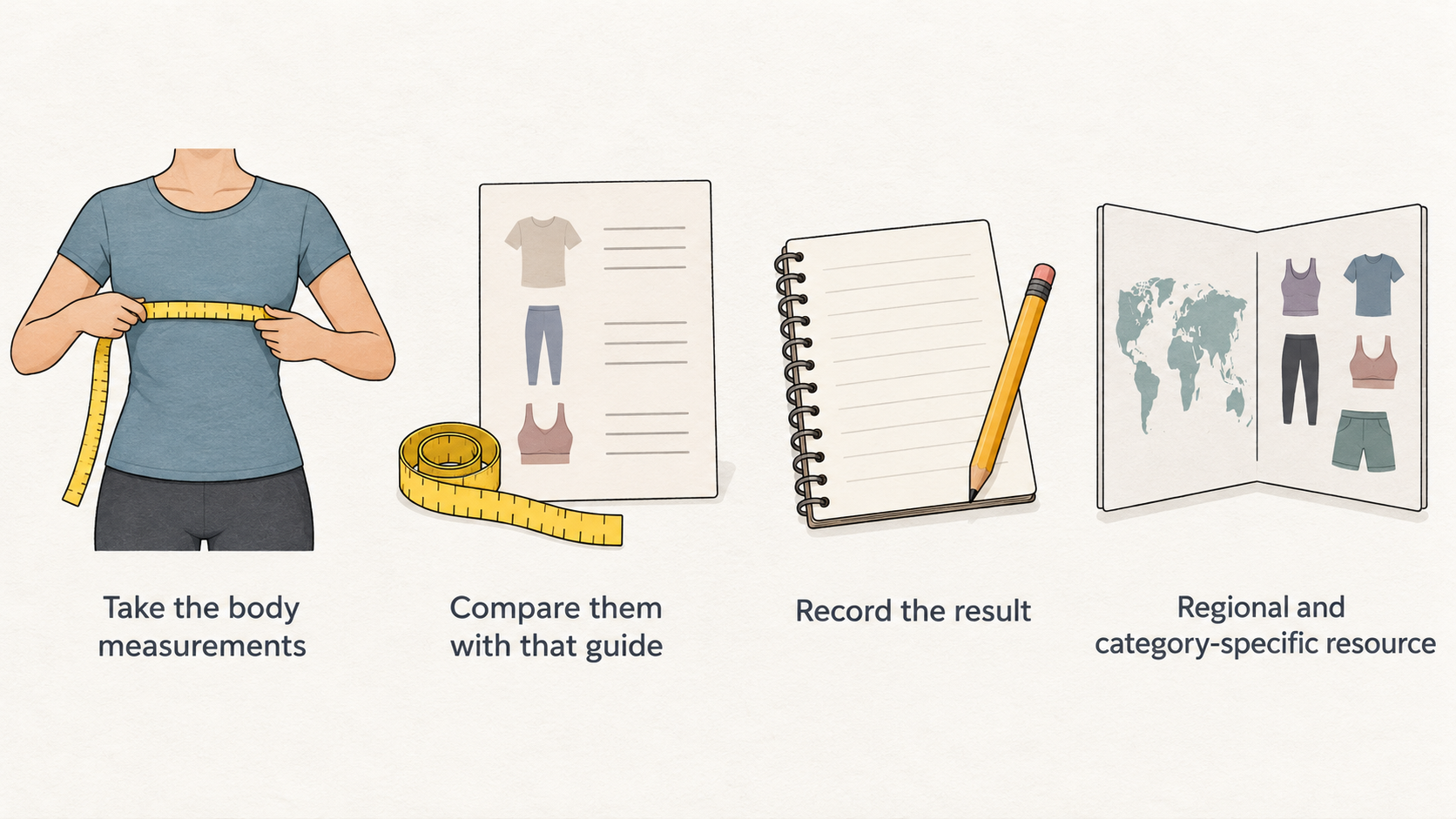
A size label is a shortcut, not a measurement. Before ordering, take the body measurements requested by the brand’s relevant guide and compare them with that guide rather than automatically reordering the size you wear elsewhere. Record the result, especially if you are shopping across different garment types or between women’s, men’s and unisex ranges.
Check that you are using the correct regional and category-specific resource. On directs UK customers to its size-guide help area, which is a reminder to look for the brand’s current UK guidance instead of relying on a retailer’s generic conversion alone. On UK size guide
Measure consistently. A flexible tape, light clothing and a relaxed posture make comparison easier. For bottoms, note the waist and hip points specified by the guide; for tops and bras, check the chest or bust measurement the guide asks for. If the chart gives a range, note where you fall within it rather than rounding to the label you expect to buy.
When you sit between sizes, do not assume that “smaller for support” or “larger for comfort” is always right. Revisit the use case. A close-fitting base layer and a relaxed outer layer can have different intended allowances. Product photographs can help you understand the cut, but measurements, stated fit notes and a practical return route are stronger decision inputs.
Keep the order confirmation and the size chart you used. If the fit is not workable on arrival, that record makes an exchange decision clearer. Our size conversion guide can help you organise cross-brand comparisons, but it should not replace the brand’s published guidance.
Check movement, coverage and pressure points
AI-generated illustration — not a retailer product photo.
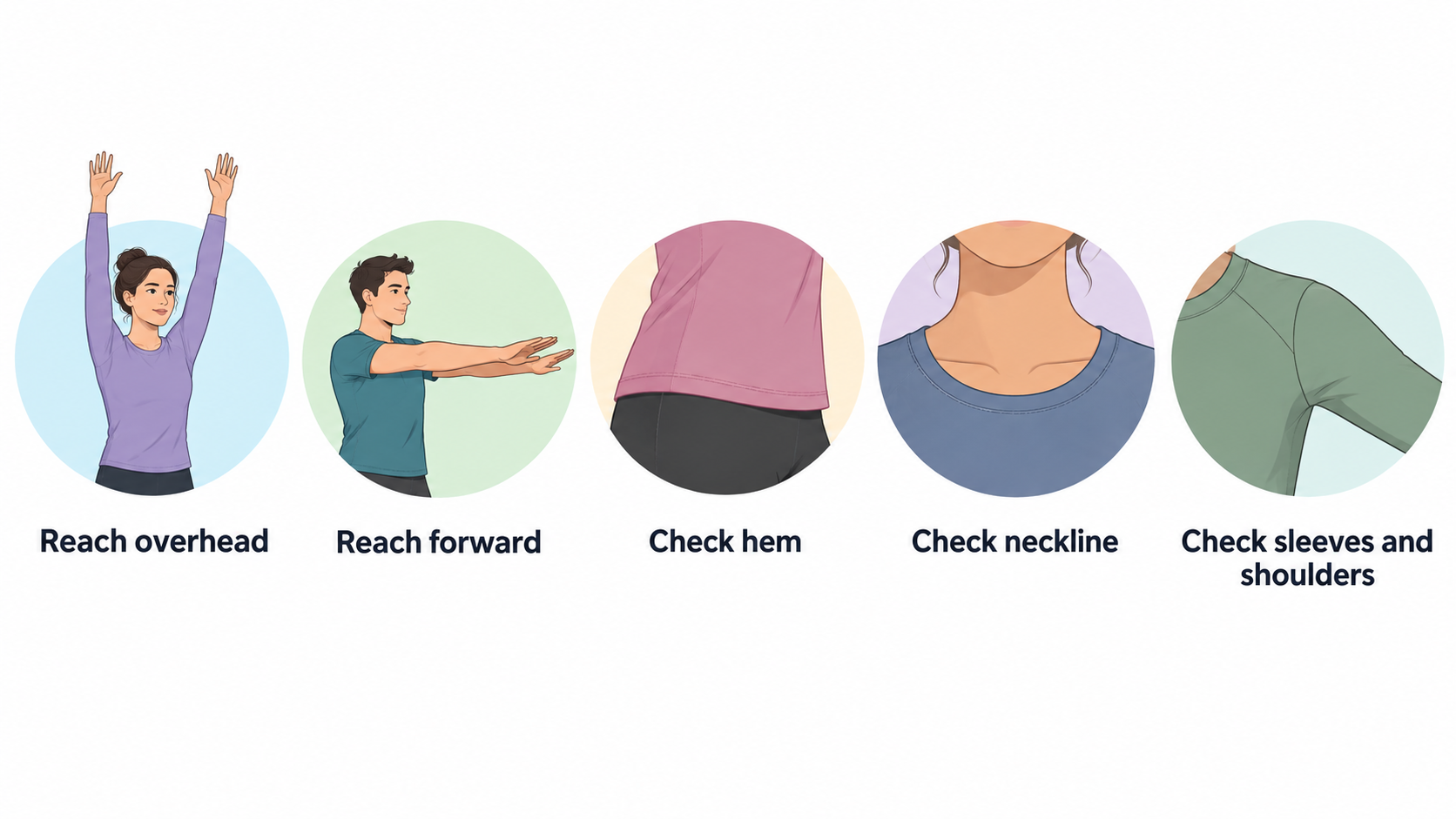
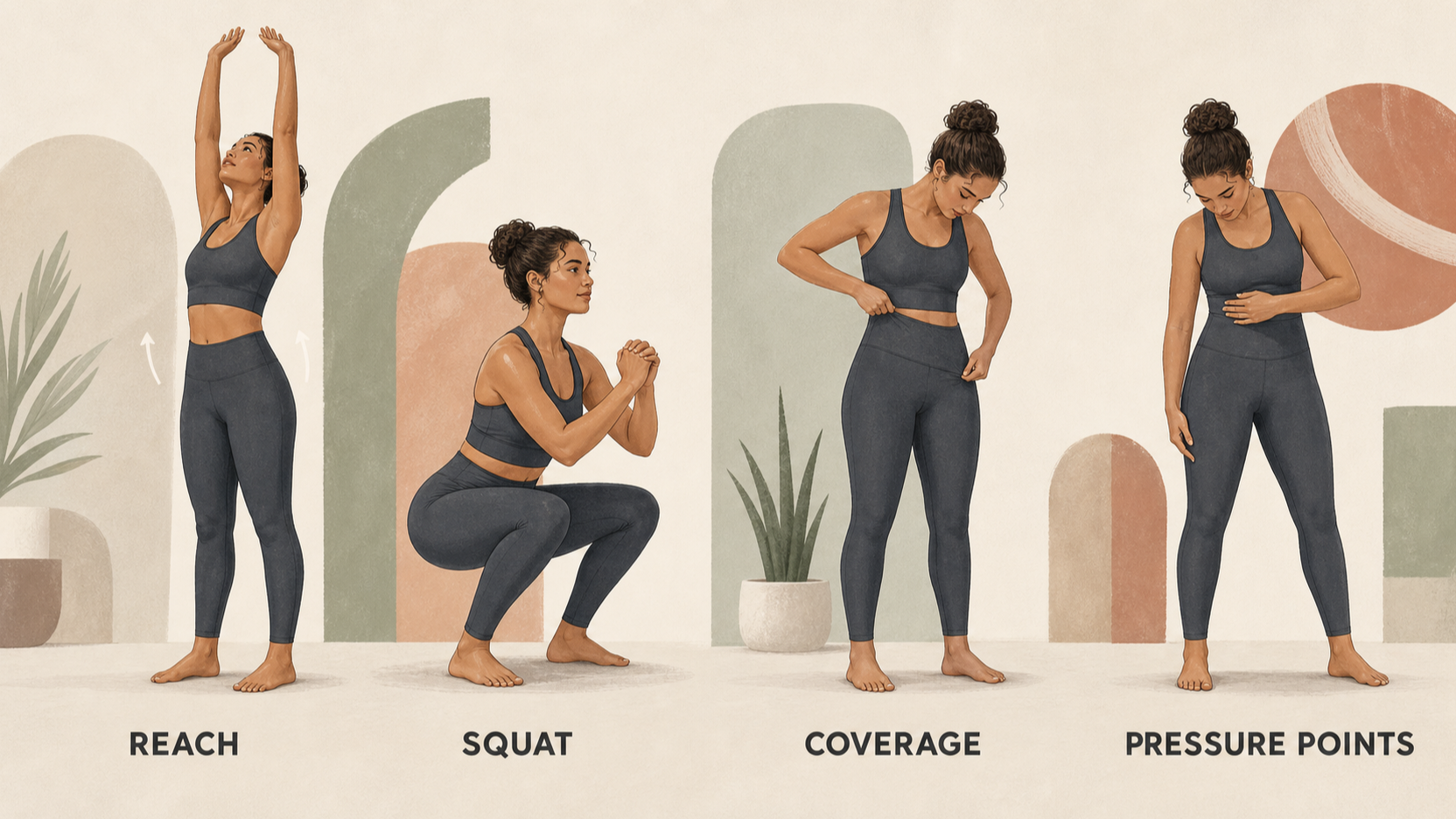
Once the garment arrives, assess fit before regular exercise use. The aim is not to recreate a workout or make a performance claim; it is to identify obvious restrictions, exposure concerns and discomfort while the item is still in a condition that may be eligible for return.
Use a short, controlled sequence in the clothing and layers you expect to pair with it:
- Reach both arms overhead and forward. Notice whether the hem rides up, the neckline shifts, sleeves bind or the shoulder area pulls.
- Sit, bend and perform a shallow bodyweight squat. Check whether waistbands roll, seams pull, pockets gape or coverage changes in a way that would concern you.
- Walk and lift one knee at a time. Look for twisting, fabric bunching or a hem that moves away from the position you need.
- Pause and identify pressure points. Straps, waistbands, zip guards, seams and labels should not create immediate pinching or chafing sensations during these basic checks.
Fit is personal, so describe what you observe rather than assuming that a garment is inherently supportive, squat-proof or suitable for a particular sport. If one issue appears only with a specific base layer, shoe belt or jacket, test the combination you actually plan to use. If the garment has adjustable features, make modest adjustments and repeat the same checks.
For specialised garments, use the relevant criteria too: our sports bra fit guide and running shorts buying guide provide more focused decision prompts.
Assess layering and temperature flexibility
Outdoor training can involve a cool start, a warmer middle and a change in wind or rain, so assess how the garment works within an outfit rather than in isolation. Begin with the layer closest to the body, then add the pieces you would realistically carry or wear over it.
Check whether sleeves, collars, hems and waistbands overlap comfortably. A base layer that feels acceptable alone may feel restrictive under a mid-layer; a jacket may alter how a hood, pocket or waistband sits. Conversely, a very loose outer piece can make it harder to judge where the underlying garment has shifted.
You do not need to predict exact temperature performance to make a better choice. Instead, decide whether the item has a clear role: close-to-body layer, insulating layer, protective outer layer or versatile everyday piece. Consider the conditions you usually face, how much adjustment you can make during a session and whether you already own compatible layers.
Avoid treating a fabric name or marketing term as a guarantee of warmth, cooling or weather protection. Read the stated product information, then test the physical interaction of the layers without putting the item through regular exercise use. Our outdoor layering guide can help you build a practical clothing system.
Read care requirements and durability signals carefully
Care information is part of total value. Before committing, read the garment’s label and published care instructions, then ask whether you can realistically follow them after repeated training use. Separate washing, drying, ironing or storage requirements may be manageable for one item and impractical for a full weekly rotation.
Product information can also reveal construction details, fibre content, closures and removable components. These are signals to investigate, not proof that a garment will last longer than another. A reinforced-looking seam, a particular fabric blend or a higher price does not establish durability without product-specific evidence over time.
Make the comparison concrete. Note how often you expect to wash the item, whether you normally air-dry kit, whether it will encounter rough surfaces or equipment, and whether you can replace it if it proves unsuitable. Check for care restrictions that conflict with your routine before removing tags or wearing the garment for exercise.
If longevity matters most, prioritise clear care information, an acceptable maintenance routine and a return route over assumptions based on branding or feel in the changing room. See our activewear care guide for a routine-focused checklist.
Check return suitability before regular wear
Fit uncertainty is a purchase-risk issue. Before regular wear, check the return terms that apply to your UK order, including the return window, condition requirements, exclusions and the process for exchanges or refunds. Nike’s UK help navigation includes returns alongside size charts and delivery help, showing that service information is part of the customer decision journey. Nike UK help
Do not assume that a garment remains returnable after exercise, washing or tag removal. Read the applicable terms for the retailer and item you bought, as terms may differ by seller, product type, promotion or channel. If the wording is unclear, seek clarification from the seller before putting the item into regular use.
A low-regret sequence is simple: preserve the item’s condition, complete your basic fit and layering checks, keep the packaging and documentation where appropriate, and decide promptly whether the fit is workable. If it is not, an exchange or deferred purchase may be more sensible than hoping the garment will become comfortable later.
Our UK activewear returns guide explains what to check before you commit.
Make the final pre-commitment check
Before you keep the garment, run through one final decision list:
- Have I compared my measurements with the relevant published size guidance?
- Does the garment suit my intended activity, movement pattern and coverage needs?
- Does it work with the layers and accessories I will genuinely use?
- Can I meet the stated care requirements within my normal routine?
- Is the price acceptable when I consider likely use, maintenance and replacement needs?
- Have I checked the applicable return conditions before regular wear?
If several answers are uncertain, pause. You can exchange the size, choose a different category, compare another option or wait for better information. That is not a failure to decide; it is a way to avoid turning a preventable fit uncertainty into a sunk cost.
Published size guidance remains valuable, but it is only one part of the decision. Use it alongside your observed fit checks and the service terms that apply to your order. For a broader cost-and-use framework, see our performance apparel value guide.
Browse our performance-apparel buying guides
Frequently Asked Questions
Should workout clothes fit tightly or leave room to move?
Neither description is universally correct. Judge the amount of room against the garment category and activity. A close-fitting layer can still allow movement, while a relaxed layer can still need stable coverage. Compare your measurements with the relevant guide, then use controlled reaches, bends and squats to identify pulling, shifting or pressure points before regular wear.
What should I do if my measurements sit between two sizes?
Check the brand’s current category-specific guidance first. Then consider the intended use, the stated cut and the layers you expect to wear. If the decision remains uncertain, preserve the item’s returnable condition and use the seller’s applicable exchange or return process rather than assuming one label will work across all garments.
Can I assess activewear fit without exercising in it?
You can complete useful basic checks without regular exercise use. Try the garment with your planned layers and move through reaching, sitting, bending, a shallow squat and walking. These checks can reveal obvious restriction, coverage changes and pressure points, but they do not prove long-term comfort or sport-specific performance.
Why should I check care and return terms before committing to a garment?
Care requirements affect whether the item fits your weekly routine, while return terms affect how safely you can resolve a sizing or fit uncertainty. Read both before washing, removing tags or wearing the garment for exercise, and rely on the terms that apply to your specific UK seller and order.
Related reading
- Best performance athleisure brands in the UK: evidence-led choices for running, training and everyday wear
- Nike sportswear review: strengths, limitations and practical alternatives for UK buyers
- On running apparel review: fit guidance, service and practical buying considerations
- How to choose workout clothes: activity, support, fit, fabric and return checks
Editorial information: About our editorial team · Read our editorial policy · Read our affiliate disclosure.