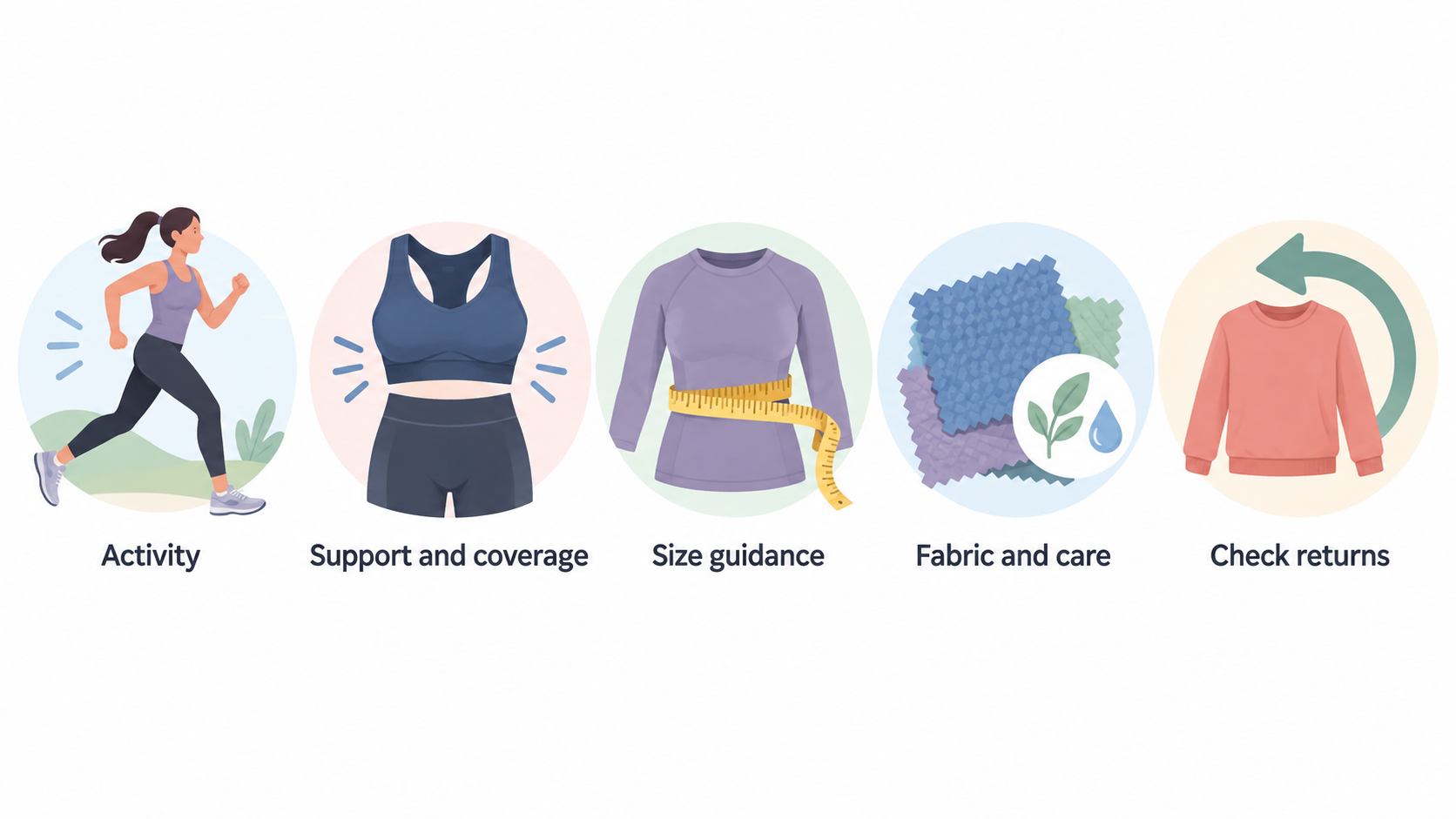
AI-generated illustration — not a retailer product photo.
Choosing workout clothes online is easier when you treat each item as part of a job, rather than starting with colour or a familiar dress size. A running layer, training legging, outdoor mid-layer and everyday sweatshirt may all sit under “activewear”, but they need to solve different problems.
A dependable purchase starts by defining the activity, then deciding what each garment must do: stay secure, provide the coverage you prefer, allow movement, add warmth, or work as an easy layer before and after exercise. From there, use the size guidance for the exact item, read its fabric and care information, and check the terms that would apply if the fit is not right.
This approach keeps the decision practical. You are not trying to find one universally “best” outfit; you are matching a garment’s role to your routine, measurements and purchase conditions.
Start with the activity and garment role
AI-generated illustration — not a retailer product photo.
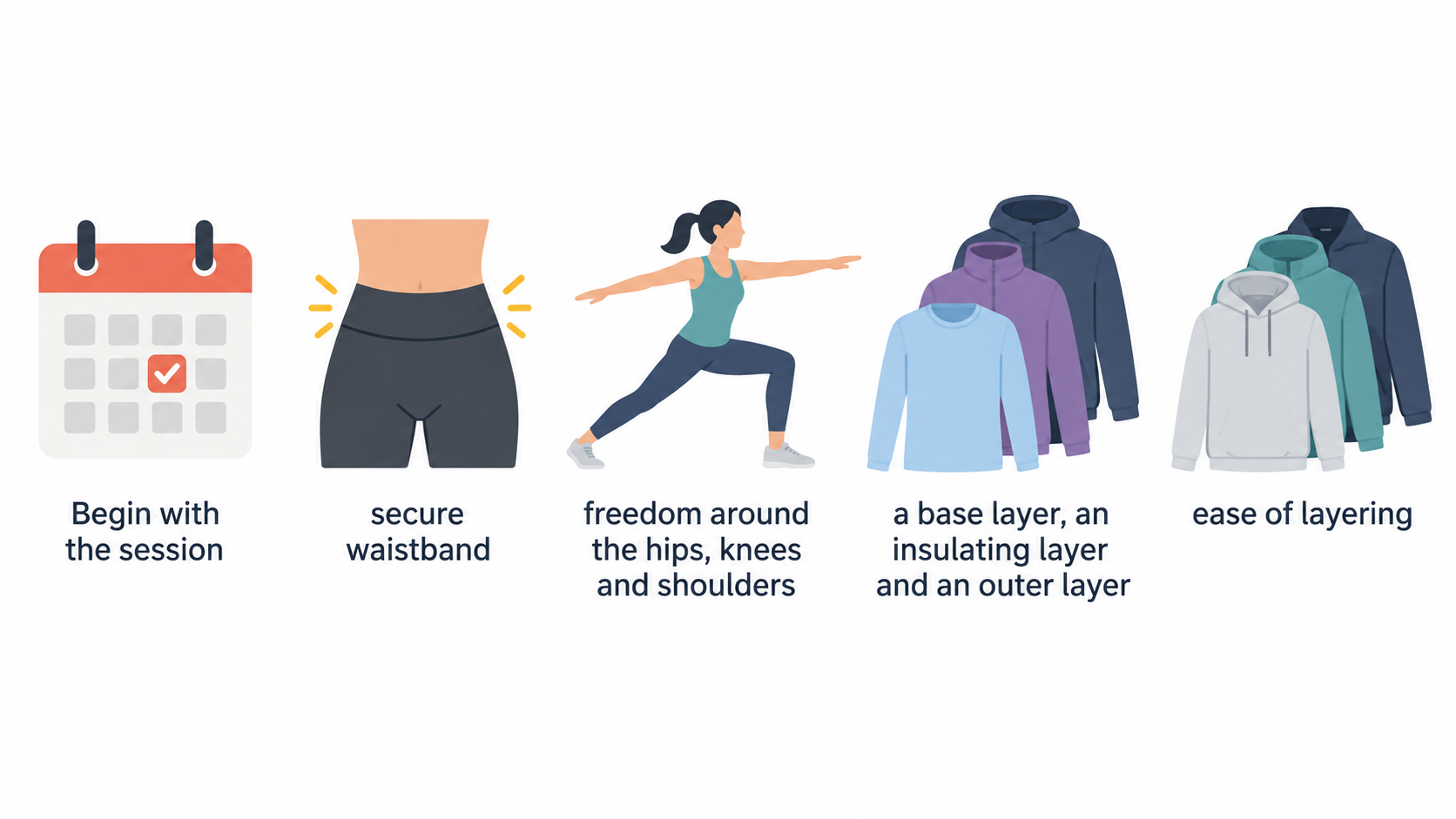
Begin with the session you expect to do most often. Running may make you prioritise a secure waistband, a layer you can regulate as you warm up, and storage that suits your essentials. Strength or gym training can make freedom around the hips, knees and shoulders more important. Outdoor sessions may call for a base layer, an insulating layer and an outer layer that you can remove or add as conditions change. For everyday wear, ease of layering and the kind of coverage you feel comfortable in may matter more than sport-specific details.
Then give every item a role. A sports bra is primarily about the level of support and coverage you want for that movement. Bottoms need to work with your waist, hips and preferred leg length. A top can be a close-fitting base layer or a looser layer over it. A jacket or sweatshirt may be for getting to the session rather than for the activity itself.
This prevents a common online-shopping mistake: comparing products that are meant to do different things. Make a short list of non-negotiables before browsing—activity, likely weather, desired coverage, support preference, pockets or layering—and use it to narrow the range.
Match support and coverage to movement
AI-generated generic editorial illustration — not a retailer product photo and does not depict the reviewed product or service. Make the activity-to-garment-role framework scannable before readers compare options.
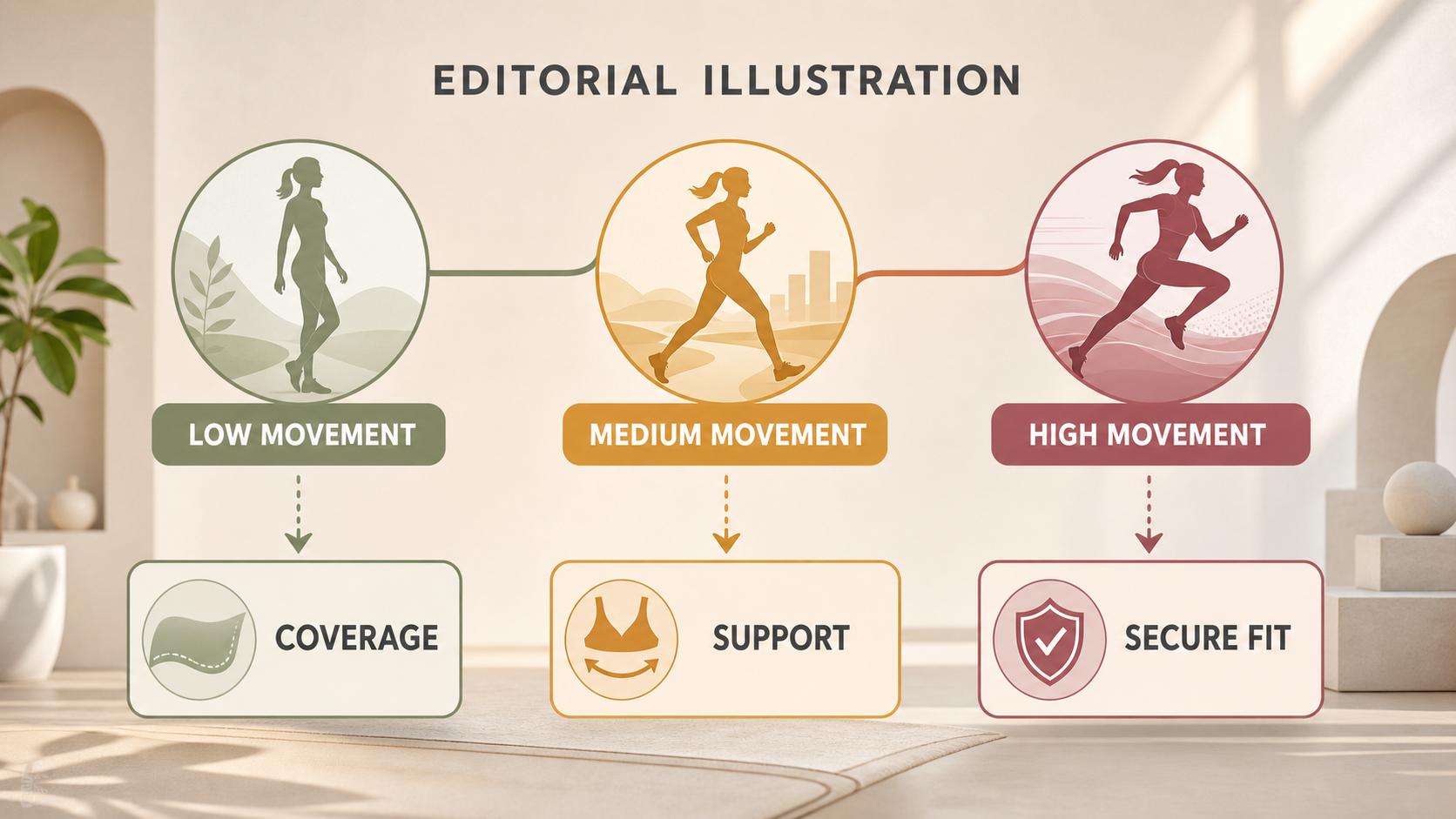 Movement changes the questions worth asking. For lower-movement activity, you may want comfort, a relaxed silhouette and the coverage you personally prefer. For training with repeated bending, squatting or lifting, consider whether the waistband, rise and overall cut look appropriate for the positions you will use. For higher-movement sessions, prioritise whether the garment is designed to stay in place and whether you would feel adequately supported and covered while moving at pace.
Support is not a single universal setting. Think about the activity, your own comfort preferences and whether you need a garment to work alone or under another layer. Adjustability can also be useful where you expect fit needs to change during the day or between activities. Coverage is equally individual: one shopper may prefer a close fit and minimal layers, while another may choose a longer top or an overshirt for confidence during the same workout.
Use published brand guidance as an input, not as a promise that one size will work across every category. Nike’s help centre directs shoppers to its size charts when choosing fit, illustrating the value of checking the relevant chart instead of treating a previous purchase as a universal reference. Nike size charts
Before adding an item to the basket, ask three simple questions: Will it let me move as planned? Does it provide the support and coverage I want? And does the product page give enough fit information for me to make a considered choice?
Use measurements to choose size and length
AI-generated illustration — not a retailer product photo.
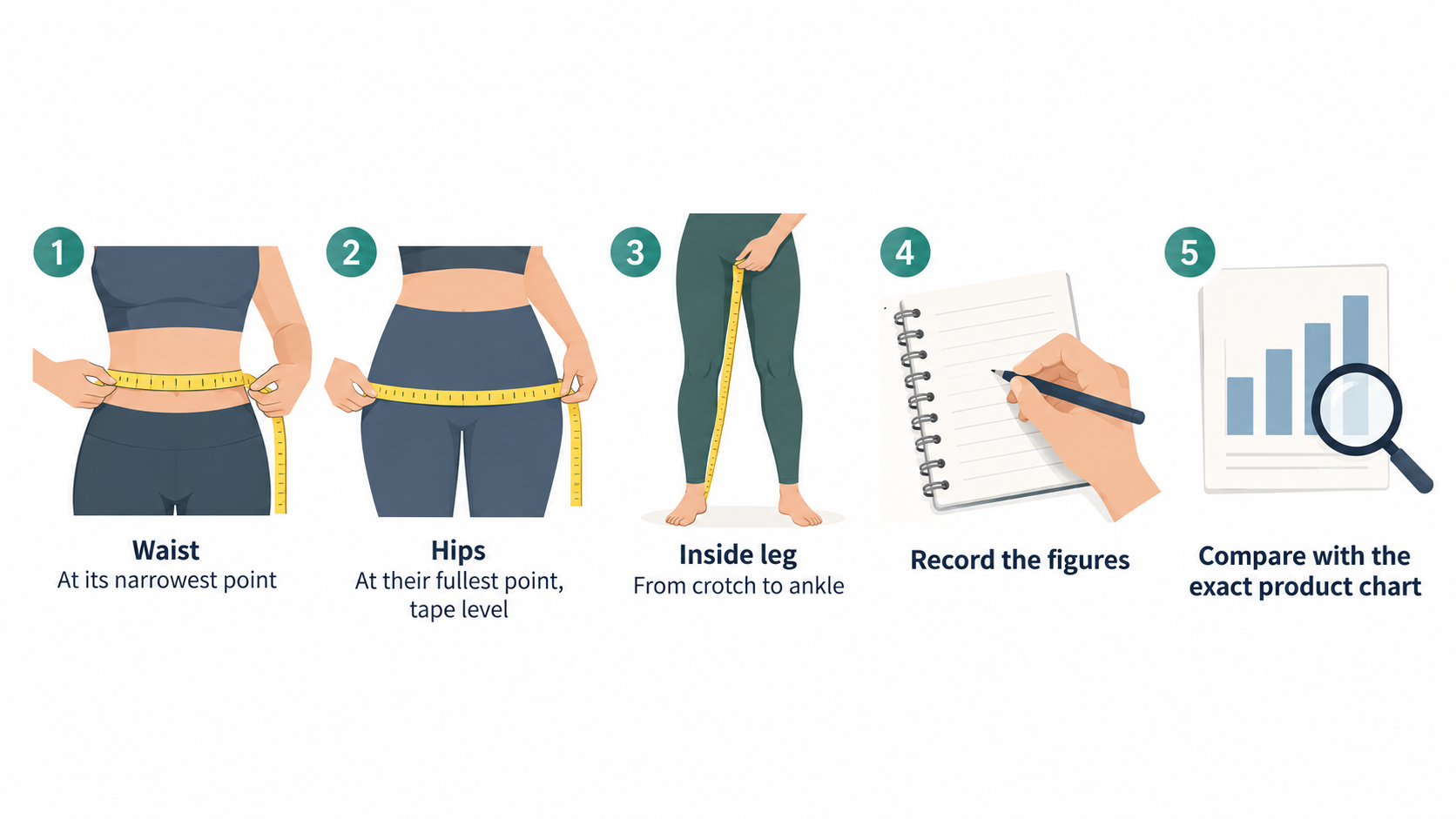
For leggings, joggers and shorts, start with a tape measure rather than the label in clothes you already own. Measure your waist at its narrowest point, your hips at their fullest point with the tape level, and your inside leg from the crotch to the ankle. Record the figures and compare them with the chart attached to the exact product you are considering.
That last step matters because bottoms combine more than one fit decision. Waist and hip measurements affect how the garment sits, while inside-leg length affects where it finishes on your body. The best choice for you may therefore be the size and length combination that fits your measurements and intended use, not simply the option closest to your usual UK dress size.
Gymshark’s women’s size guide is a useful example of what to look for in a published chart. It covers women’s bottoms including leggings, joggers and shorts; lists waist, hip and inside-leg references; and gives short, regular and tall inside-leg options. Its measuring instructions define waist as the narrowest part, hips as the fullest part with the tape flat and level, and inside leg as the measurement from crotch to ankle. Gymshark Women’s Size Guide
Use that information as a method, not as a reason to assume another brand will fit the same way. Open the chart on the product page, check any fit notes, and decide whether you want a closer or more relaxed feel for the activity. If you are between options, note what matters most for that garment—waist security, hip room, leg length or layering space—before choosing.
It is also helpful to keep a small record after a successful purchase: product category, chosen size, length, how you wanted it to fit, and any product-page notes that influenced the choice. It gives you a more useful reference point for the next comparison than a generic size label alone.
Assess fabric, care and durability signals
Fabric information is most useful when it helps you understand ownership, rather than when it is treated as proof of performance. Read the composition, care instructions and any product-specific construction details on the page. These can tell you what the brand asks you to do to look after the item and whether that routine suits how you plan to use it.
Ask practical questions. Are you happy to follow the stated washing instructions? Will you need several pieces in rotation while one is being washed? Is the garment meant to be worn next to skin, over a base layer, or as an outer layer? Does the product description explain the fit and use case clearly enough for your needs?
Avoid assuming that a higher price, a familiar fabric name or a technical-sounding description automatically means an item will last longer. Durability depends on the specific product, how often it is worn, how it is washed and the demands placed on it. Without product-specific evidence, it is better to treat fabric and care details as comparison points rather than guarantees.
For a fair comparison, place similar products side by side and note the information each page actually supplies: composition, care directions, intended fit, construction details and any limitations. A product with a care routine you can realistically follow may offer better value to you than one whose maintenance requirements do not fit your routine.
Check returns, delivery and total purchase value
Fit is only one part of value. Before checkout, read the current delivery and return terms that apply to your order, including any conditions for returning clothing and the time available to begin the process. Policies can vary by retailer, market and item, so use the information displayed for the purchase you are about to make.
Check the full basket cost, not only the headline price. Consider delivery charges, any threshold for free delivery, the return process and whether you would need to order more than one size or length to compare fit. If you do plan to compare options at home, make sure you understand the retailer’s current rules before removing tags or wearing the item beyond what the policy permits.
It is also worth separating a good product price from a good purchase for you. An item may be attractive in isolation but less suitable if the delivery timeline, return terms or care burden do not work with your plans. Keep a note of the policy details that affected your choice; it will make future retailer comparisons quicker and more consistent.
Follow a repeatable buying checklist
Use the same sequence each time you shop online:
- Define the activity and the job of each garment.
- Set your support, coverage, movement and layering priorities.
- Take current waist, hip and inside-leg measurements where bottoms are involved.
- Compare those measurements with the exact product’s size chart and fit notes.
- Review fabric composition and care requirements as ownership information.
- Check the current delivery, checkout and return terms before placing the order.
For women’s bottoms, the Gymshark guide demonstrates the kind of measurement and leg-length information a shopper can compare before ordering: waist, hip and short, regular or tall inside-leg references. Gymshark Women’s Size Guide
After purchase, record the size, length, desired fit and policy details that informed the decision. Over time, this creates your own evidence-led comparison system across brands and product categories.
Frequently Asked Questions
Should I choose workout clothes by my usual dress size?
Use your usual size only as a starting point. Check the exact product’s chart and fit notes, particularly when you are changing between leggings, joggers, shorts, tops and sports bras. Different garment roles can make different measurements or fit preferences more important.
How do I measure myself for leggings or joggers?
Measure your waist at its narrowest point, hips at their fullest point with the tape flat and level, and inside leg from crotch to ankle. Gymshark’s women’s guide uses those three measurements and provides short, regular and tall inside-leg references for its women’s bottoms. Gymshark Women’s Size Guide
Is a more expensive fabric automatically more durable?
No. Price or fabric terminology alone cannot prove how a particular garment will hold up for you. Compare the product’s stated composition and care directions, then decide whether its intended use and upkeep fit your routine.
What should I check in a return policy before trying activewear?
Confirm the current return window, condition requirements, costs and any restrictions that apply to the order. If you are ordering alternative sizes or lengths, check those details before trying items in a way that could affect eligibility.
A little preparation makes online activewear shopping more repeatable: match the garment to the activity, use your measurements against the exact chart, and confirm the purchase terms before you commit.
Related reading
- Best performance athleisure brands in the UK: evidence-led choices for running, training and everyday wear
- Nike vs Gymshark: which sportswear brand is the better fit for your training wardrobe?
- Gymshark review: who its training apparel suits and what UK buyers should check
- How workout clothes should fit, feel and perform before you commit
Editorial information: About our editorial team · Read our editorial policy · Read our affiliate disclosure.