AI-generated illustration — not a retailer product photo.
Choosing between Nike and Gymshark is less about declaring one brand universally better and more about matching the available information to how you train. Nike presents a broad UK navigation across sports and clothing categories, while Gymshark provides a detailed women’s bottoms measurement guide. Neither supplied source packet supports a verdict on durability, current returns, price or real-world fit, so those points need checking before you order.
Nike vs Gymshark: the short verdict
AI-generated illustration — not a retailer product photo.
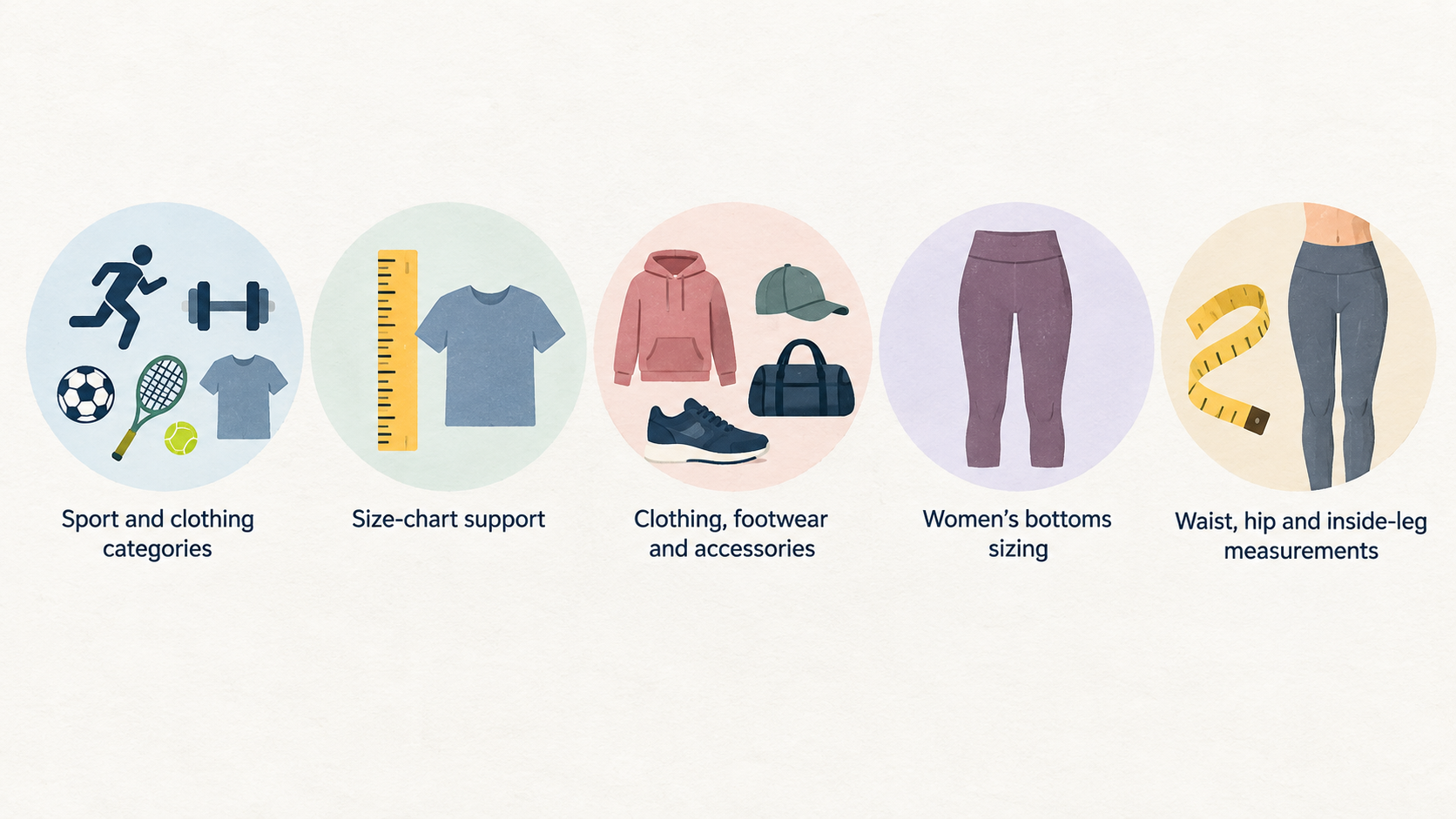
Start with Nike if you want to browse a wide published mix of sport and clothing categories, including Running, Training and Gym, Football, Tennis and Sportswear. Its UK help and shopping navigation also provides a clear entry point to size-chart support. That breadth can be useful if your training wardrobe crosses several activities or you want to compare clothing alongside footwear and accessories in one ecosystem.
Choose Gymshark as a starting point if women’s bottoms sizing is the immediate sticking point. Its published guide covers leggings, joggers, shorts and more, and asks shoppers to compare waist, hip and inside-leg measurements with the chart. It also lists short, regular and tall inside-leg options. This is useful selection support, but it is not proof that a particular garment will feel right or fit every body shape.
For values-led shoppers, treat both choices as prompts for further research rather than as ethics recommendations. The supplied independent assessments differ in date and underlying rating context: the Nike article refers to a January 2026 rating, while the Gymshark article is based on a May 2020 rating. Check current brand disclosures and the exact product before buying.
What this Nike and Gymshark comparison covers
AI-generated illustration — not a retailer product photo.
This comparison looks at what the supplied material can substantiate for UK shoppers: published sport and clothing positioning, size-support resources, and independently documented ethical limitations. It is designed to help you decide which site to investigate first, not to simulate a wear test.
Nike’s evidence is a UK size-chart help page whose navigation shows a broad set of men’s, women’s and kids’ clothing and sport routes. That supports a description of published range breadth and available size-chart access. It does not establish that Nike makes the best item for every sport, body shape or budget.
Gymshark’s official evidence is specifically a women’s guide for tops, sports bras and bottoms, with detailed bottom measurements and leg-length options. It supports a narrower, more concrete discussion of women’s bottoms sizing. It should not be extended to men’s products, every garment category, or a guarantee of fit.
The independent material provides context on each brand’s documented ethical limitations, but the reports are not interchangeable snapshots. One is recent and one is dated. This article does not claim hands-on experience, current return terms, delivery performance, durability, comfort, stock availability or price leadership because the supplied evidence does not establish them.
Nike: strengths and limitations for UK training shoppers
AI-generated illustration — not a retailer product photo.
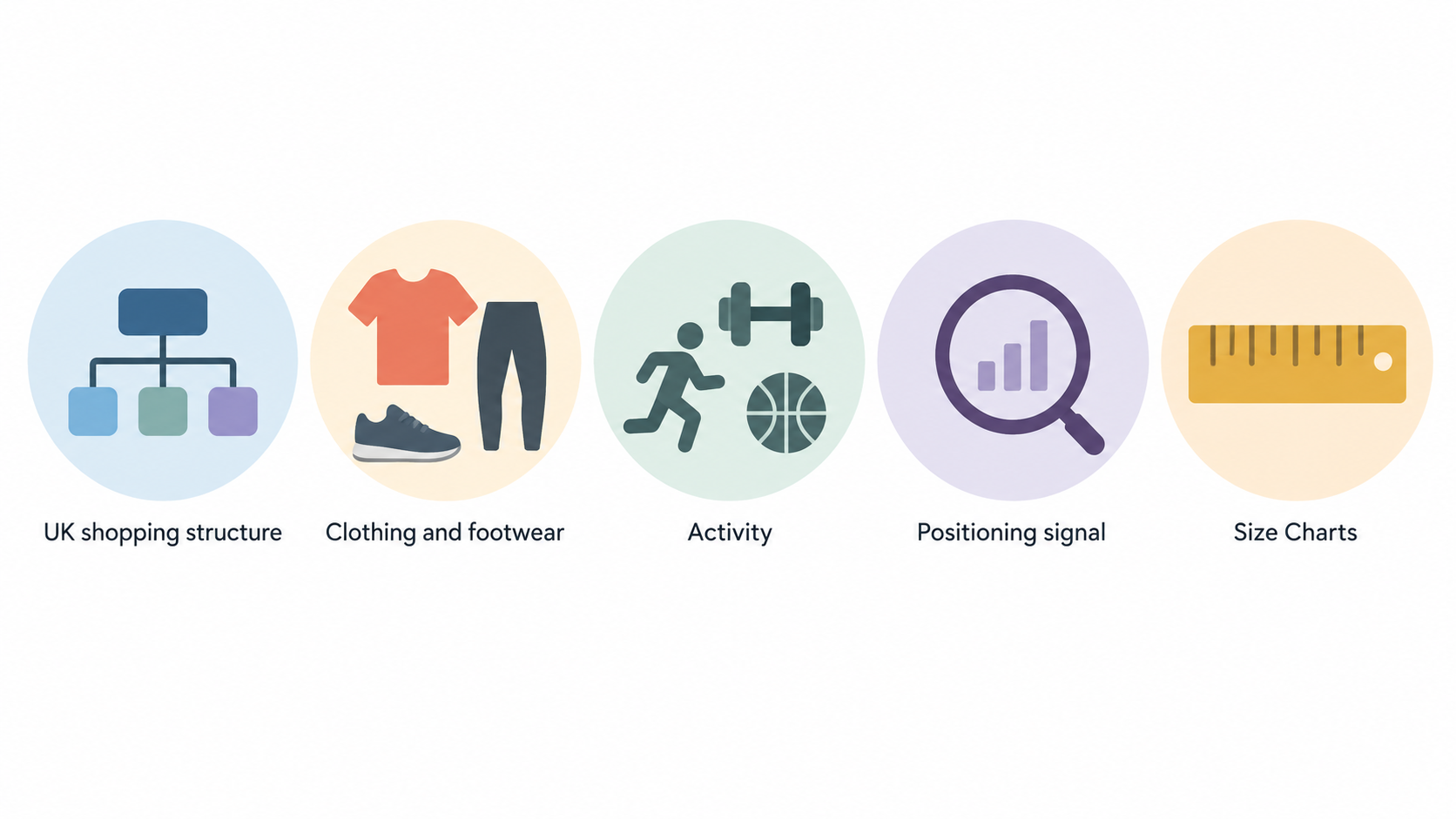
Nike’s clearest evidence-backed strength here is the scale of its published UK shopping structure. Its navigation separates clothing and footwear by activity and includes Training and Gym, Running, Football, Basketball, Tennis, Golf and Sportswear across relevant customer groups. That makes Nike a plausible research starting point for someone whose wardrobe spans gym sessions, runs and everyday sportswear. It is a positioning signal, not a claim that any one Nike garment performs better than a competitor.
The Nike help page also offers a dedicated Size Charts route. For a shopper who is still narrowing down a category, that is a practical place to begin checking the brand’s published sizing information before choosing an item. Use it alongside the size information on the individual product page, especially where cuts, fabrics or intended activity differ.
The limitation is that broad navigation does not answer the questions that decide a specific purchase. The supplied material does not compare Nike’s garment fit, fabric feel, longevity, price, stock, delivery or current UK return conditions with Gymshark’s. Verify those details live before checkout.
Values-conscious buyers should also investigate further. Good On You’s Nike article, published in March 2026, says its discussion is based on a January 2026 rating and characterises Nike as having further to go on ethical and sustainability issues. That is independent editorial context, not a complete current audit of every Nike product or supply-chain claim. Read the methodology and current disclosures if ethics is central to your decision.
Gymshark: strengths and limitations for UK training shoppers
Gymshark’s supplied official guide is particularly useful for women choosing bottoms. It covers leggings, joggers, shorts and more, and maps UK, US and EU sizes against waist, hip and inside-leg measurements. The guide explains how to measure each field: the narrowest part of the waist, the fullest part of the hips, and the distance from crotch to ankle for inside leg.
Its leg-length information adds another practical comparison point. The chart lists short, regular and tall inside-leg options at 72.5cm, 77.75cm and 82.5cm respectively. If inseam length is a recurring problem, measuring first and comparing those published options may be more useful than selecting from a letter size alone.
There are important limits. The source is a women’s guide dated May 15, 2026. It is sizing support, not evidence that every Gymshark bottom has the same cut, compression, opacity, fabric behaviour or fit outcome. Check the specific product page and any item-level size advice before ordering.
For ethical context, the supplied Good On You article was published in July 2020 and says it is based on a May 2020 Gymshark rating. It raises concerns about materials, textile waste, emissions targets, worker empowerment and living-wage evidence. Because this assessment is dated, use it as a reason to seek newer independently verifiable information and current company disclosures, rather than as a definitive statement of Gymshark’s present practices.
Nike vs Gymshark: sizing support, positioning and evidence limits
| Decision area | What the supplied evidence supports | What to verify before ordering |
|---|---|---|
| Published positioning | Nike’s UK navigation covers a broad range of sports and clothing categories. | Whether the specific item suits your activity and wardrobe needs. |
| Women’s bottoms sizing | Gymshark publishes waist, hip and inside-leg measurements plus short, regular and tall options. | Product-level cut, available length, and whether the measured size works for you. |
| Nike size help | Nike provides a UK Size Charts entry point. | The relevant category chart and the item’s own sizing guidance. |
| Ethical context | Independent reporting identifies limitations for both brands, but the report dates and contexts differ. | Current disclosures, methodology and the issues that matter most to you. |
The direct comparison is strongest on the specificity of the supplied sizing resources. Gymshark’s women’s bottoms guide gives measurement fields and leg-length choices in the evidence packet. Nike’s supplied page establishes accessible UK size-chart support and broad category navigation, but does not provide an equivalent detailed bottoms table in the excerpt.
This does not make Gymshark the automatic fit winner. A size chart helps you choose a starting size; it cannot guarantee fit, comfort or suitability for a particular workout. Nike’s broader published sport navigation may be more relevant if you are shopping across activities, but it does not prove a superior training outcome.
The ethics comparison also needs care. The supplied Nike assessment is much newer than the Gymshark assessment, and each article reflects its own ratings context. Avoid converting either source into a simple league table. If ethical evidence is decisive, examine up-to-date independent research and brand documentation before you buy.
Returns, durability, price and service should remain live checks. The packet does not support a conclusion on which brand has better return conditions, lasts longer, costs less or delivers a better customer-service experience in the UK.
How to choose between Nike and Gymshark
Use your first decision point to narrow the research. If you shop across running, gym training and casual sportswear, Nike’s published breadth makes it a sensible first catalogue to explore. If you are buying women’s leggings, joggers or shorts and want measurement-led guidance, begin with Gymshark’s waist, hip and inside-leg chart.
Then move from brand-level information to the actual product. Measure yourself, compare those measurements with the relevant chart, and check whether the specific item is offered in the length and size you need. A chart is useful evidence for selection, not a promise of fit. If you are between sizes or unsure about the cut, seek current product-specific guidance before committing.
Before checkout, verify these practical details live:
- Current UK return eligibility, return window, cost and exclusions.
- Current price, promotions, stock and delivery information.
- Product-specific measurements, fabric composition and care instructions.
- Whether the item is designed for the activity you actually do.
- Current environmental and labour disclosures, plus independent research if values are a priority.
This approach avoids unsupported performance rankings. Nike may suit a buyer prioritising broad sport navigation; Gymshark may suit a buyer prioritising a published women’s bottoms measurement guide. If your priority is a current returns policy, a specific material, or independently verifiable ethical information, let those checks decide rather than relying on a brand-level impression.
Alternatives to consider if neither brand fits
Look beyond both brands when your key requirement is more current, independently verifiable labour and environmental information. The supplied independent reports identify limitations for each brand, and the Gymshark assessment in particular is dated. In that situation, compare brands using current third-party research, transparent supplier and materials disclosures, and the methodology behind any rating.
You may also need a different shopping route when your requirements are highly specialised. Examples include a very specific running use case, a technical outdoor requirement, a non-standard sizing need, or a need for a clearly stated current UK return policy. Start with the product specification and live policy details, then compare only brands that can document those needs.
Avoid choosing an alternative simply because it is described as more sustainable, more durable or better value without evidence you can inspect. A credible shortlist should let you check the exact product’s measurements, materials, care requirements, availability and current purchase terms.
Frequently Asked Questions
Does Gymshark provide a women’s bottoms size guide for UK shoppers?
Yes. The supplied Gymshark guide includes women’s bottoms sizing for items such as leggings, joggers and shorts. It lists UK sizing alongside waist, hip and inside-leg measurements, with short, regular and tall leg-length options. Use it as a starting point and confirm the individual product’s guidance before ordering.
Does the supplied evidence show which brand has the better return conditions?
No. The evidence packet does not establish current return conditions for either brand. Check the live UK returns policy, including eligibility, time limits, fees and exclusions, before placing an order.
Can this comparison determine which brand is more durable?
No. There is no supplied hands-on testing, long-term wear evidence or like-for-like product testing. Durability should be treated as a product-level question requiring current materials, care information and suitably relevant independent evidence.
What do the supplied independent sources say about Nike and Gymshark’s ethical limitations?
The Nike article discusses a January 2026 Good On You rating and says Nike has further to go on ethical and sustainability issues. The Gymshark article, published in 2020 and based on a May 2020 rating, raises concerns including materials, waste, emissions targets and labour evidence. Because the reports have different dates and contexts, use both as starting points for current research rather than a final ethical ranking.
Ready to narrow your options? Use your measurements and the live product details to create a short, evidence-led activewear shortlist before checkout.
Sources
Related reading
- Best performance athleisure brands in the UK: evidence-led choices for running, training and everyday wear
- Nike sportswear review: strengths, limitations and practical alternatives for UK buyers
- Gymshark review: who its training apparel suits and what UK buyers should check
- How to choose workout clothes: activity, support, fit, fabric and return checks
Editorial information: About our editorial team · Read our editorial policy · Read our affiliate disclosure.