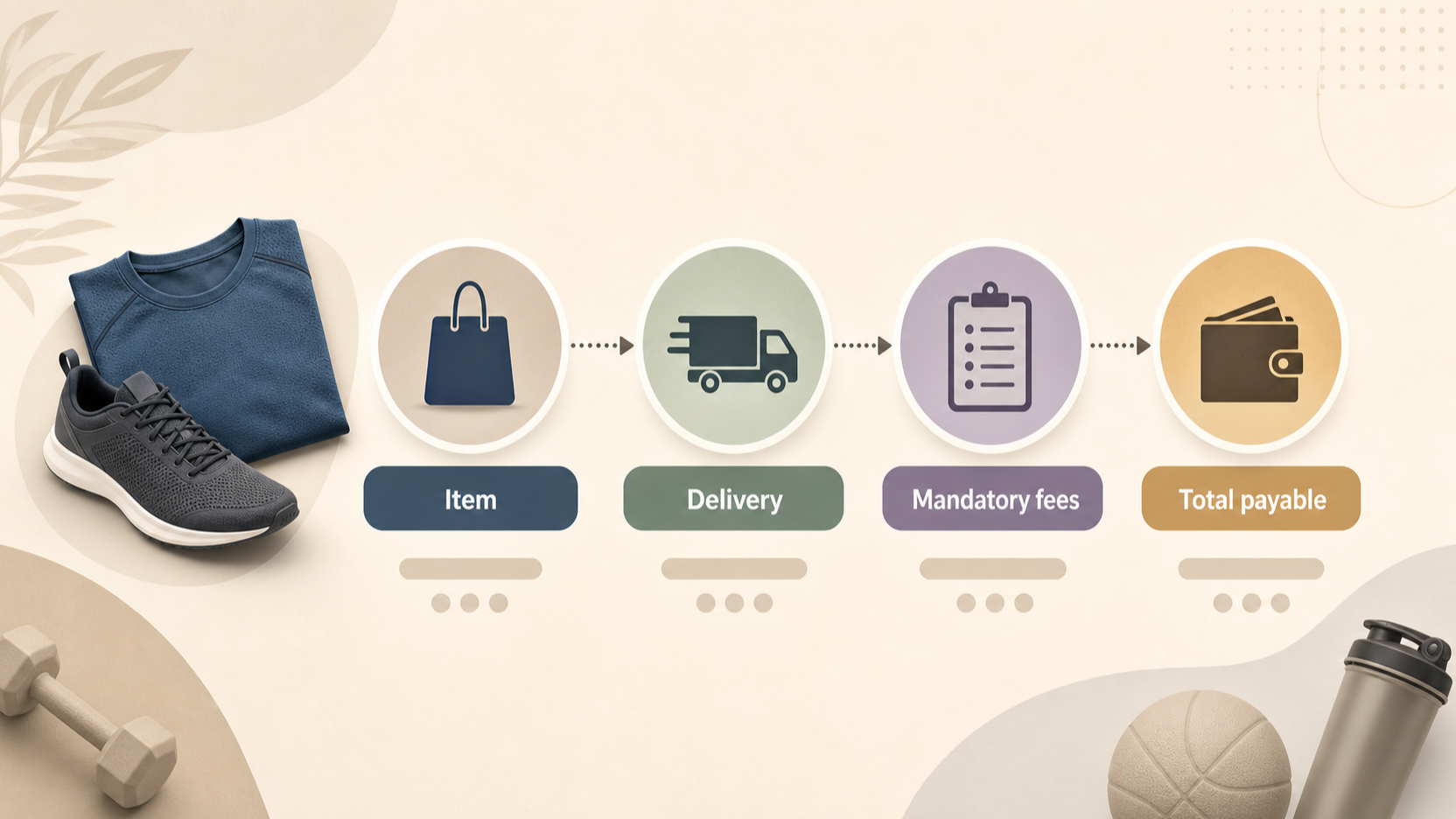
A genuine sportswear deal is more than a large percentage off. For UK shoppers, the useful question is whether the item is still the right purchase after you have checked the complete payable price, the basis of the comparison, your exit options if it does not work out, and its suitability for the job you need it to do.
What a Genuine Sportswear Deal Means
AI-generated illustration — not a retailer product photo.
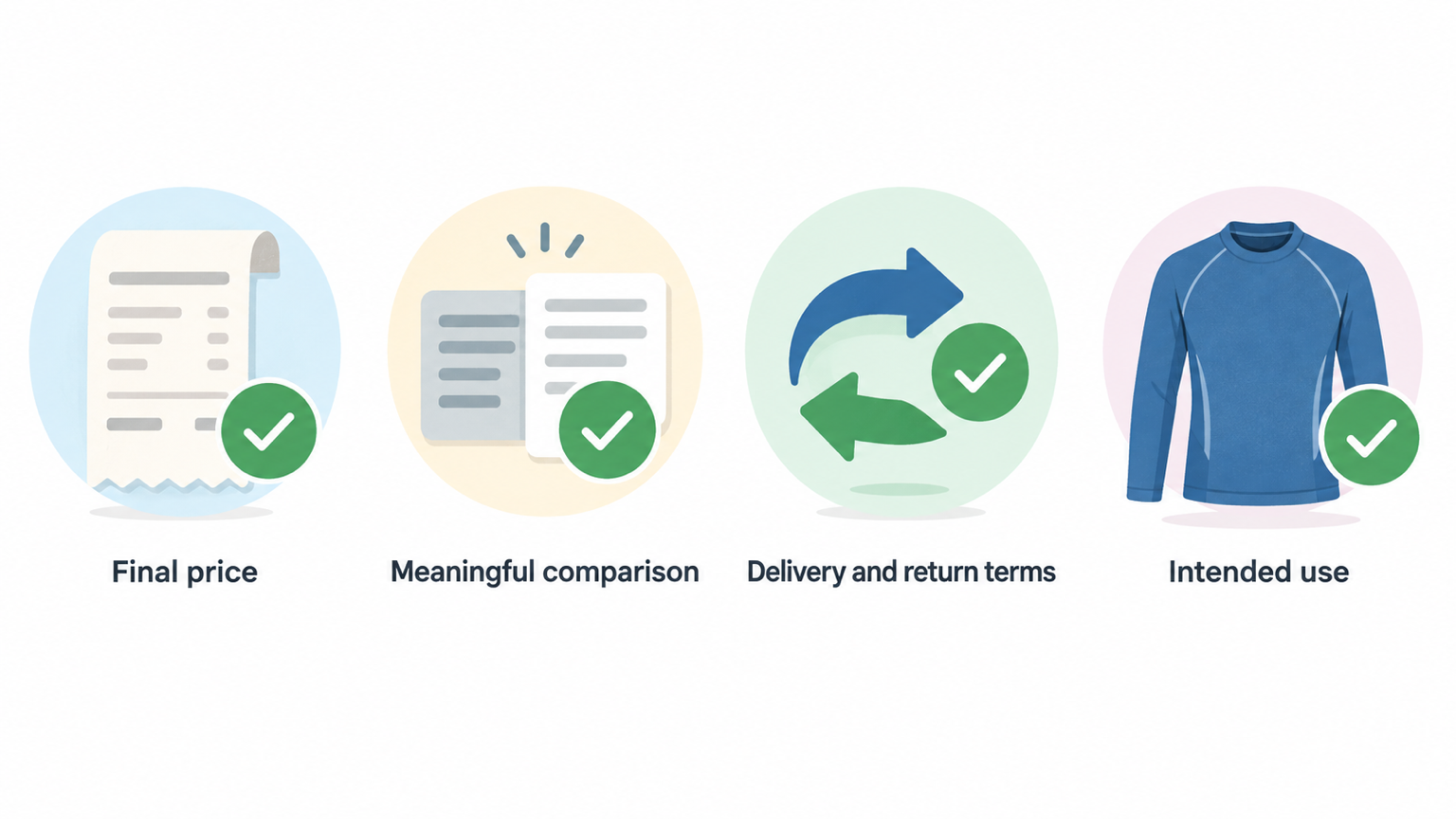
A promotion can look compelling long before you know what it will actually cost or whether the item will earn a place in your kit. Treat the headline discount as the start of the check, not the conclusion. A pair of running tights, a training top or an outdoor layer is a genuine deal only when the final price is acceptable, the comparison is meaningful, the delivery and return terms are workable, and the product suits your intended use.
This approach is deliberately retailer-neutral. It does not require product testing or assume that a sale item is poor value. It simply prevents a tempting percentage reduction from doing all the decision-making for you.
For price information, the UK government’s CMA guidance says consumers should receive clear, complete and accurate total prices up front, including charges they cannot avoid. That makes the final checkout figure a better starting point than a banner saying “up to 60% off”. Read the official price-transparency guidance.
Start With the Total Checkout Price
AI-generated illustration — not a retailer product photo.
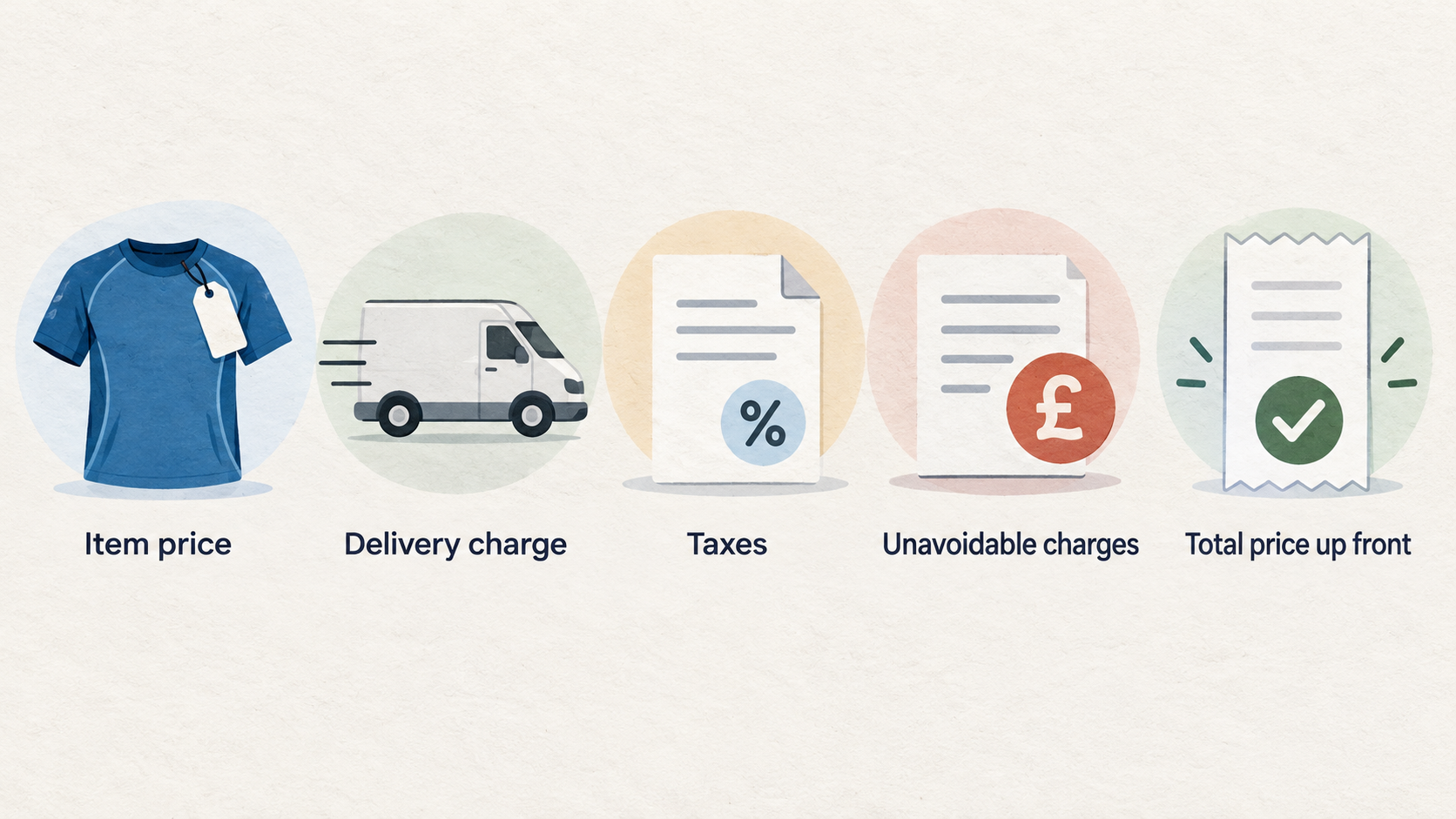
Start by asking a plain question: what will leave your account if you place this order? Keep the item price, delivery charge, taxes and any other unavoidable charge in the same comparison. Government guidance says traders must provide the total price up front and that hiding unavoidable fees, taxes or other charges until later in the purchase process can be unlawful.
That matters when two apparently identical offers differ at checkout. A lower product price may cease to be lower once delivery is added. Equally, free delivery may only apply at a threshold that encourages an extra purchase you did not otherwise need. Record the payable total for the item you would genuinely buy, rather than building a basket to make a promotion look better.
Compare like with like. Check the exact product, size, colour and fulfilment choice before deciding one price beats another. A reduced price for an unavailable size or a different colourway is not necessarily a usable alternative. If collection, standard delivery and faster delivery have different costs, compare the option you would actually choose.
A quick note on your phone can be enough: product name or SKU, size, colour, date checked, item price, delivery and final total. This makes it easier to spot whether a saving is real or simply moved elsewhere in the purchase journey.
Put Reference Prices and Discount Claims in Context
A crossed-out price can be useful context, but it is not proof on its own that the current price is exceptional. First identify what the comparison represents. Is it a manufacturer’s recommended price, the retailer’s own previous price, or a competitor’s current price? These are different reference points and should not be treated as interchangeable.
Then check whether the reference relates to the same item you can buy now. Match the exact SKU where possible, along with colourway, size availability and any bundle or fulfilment difference. A claimed saving against a price for a different version of the garment is less informative than a comparison for the same purchasable item.
The CMA’s price-transparency guidance emphasises that price information should help consumers make informed decisions, shop around and compare competing products. Use that principle practically: note when you checked, retain the product details, and compare complete prices rather than only the percentage displayed.
If you cannot establish what the reference price means, do not try to calculate certainty from it. Judge the present total against your budget and other available like-for-like options. The promotion may still be worthwhile, but the headline saving should carry less weight.
Check Delivery, Returns and Your Cancellation Rights
AI-generated generic editorial illustration — not a retailer product photo and does not depict the reviewed product or service. Help readers factor cancellation and return timing into the real risk of an online sportswear deal.
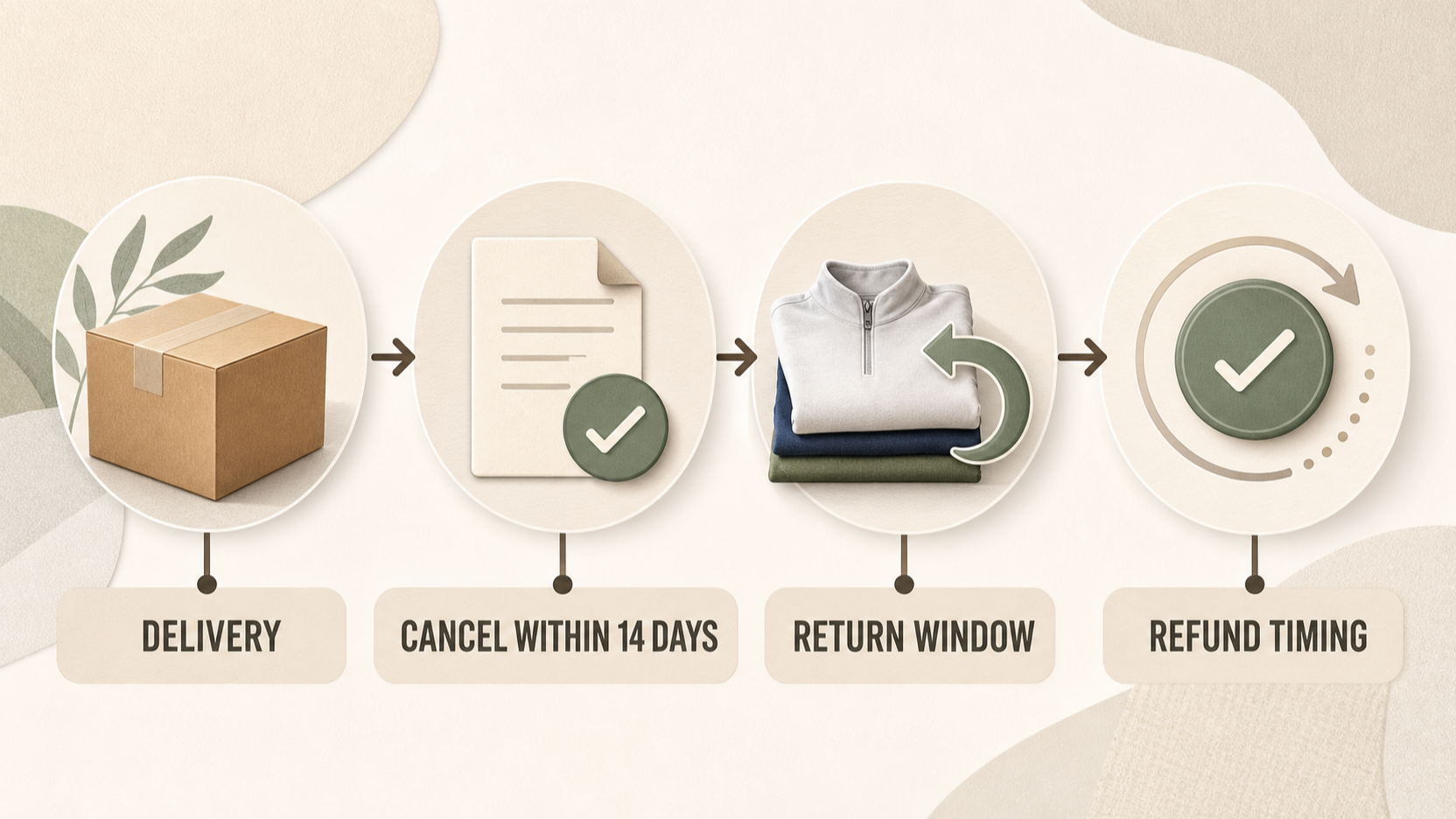 Delivery and returns can change the real risk of a sportswear purchase, particularly where fit, fabric feel or layering needs are hard to judge online. Before paying, check the delivery cost and timing, the return process, the stated return costs and whether the promotional terms alter any practical part of the offer.
For online, mail and telephone orders, GOV.UK says customers generally have a right to cancel for a limited time even when an item is not faulty, subject to applicable exceptions. Where the right applies, the customer must tell the seller within 14 days of receiving the item that they want to cancel, then has another 14 days to return it. The seller must refund within 14 days of receiving the item back.
This is different from the position for goods that are faulty, not as described or do not do what they are supposed to do: GOV.UK says a full refund must be offered in those cases. Change-of-mind cancellation and remedies for faulty or misdescribed goods are therefore not the same question.
The same guidance says the cost of standard delivery must be refunded where applicable; if a customer chose a more expensive delivery option, the seller need only refund the standard-delivery cost. It also says customers may handle an item as they would in a shop, such as trying it on, although used or damaged items may affect what can be deducted from a refund.
Read the retailer’s terms before relying on a return route, and keep the order confirmation. A small price advantage is less persuasive if the return route is costly, slow or unsuitable for a sizing-sensitive purchase. Read GOV.UK’s returns and refunds guidance.
Assess Product Suitability and Quality Signals
A lower price does not make an unsuitable item good value. Begin with the activity: a layer for winter road running, a top for gym training and a jacket for outdoor walking can demand different levels of warmth, weather protection, movement and storage. Decide what matters most before opening sale pages.
For clothing, check the practical information the listing actually provides. That can include the garment’s stated use, fabric composition, care instructions, fit description, size guidance and the features shown in the product details. Use these details to compare the item with what you already own and with the conditions in which you expect to wear it.
Be especially cautious about compromises created by limited sale stock. A colour you would not wear, a size that only just fits, or a layer that duplicates an existing item may be cheap without being useful. Conversely, a modest discount on a garment that fills a clear gap and is likely to be worn regularly can offer better value than a deeper reduction on an impulse purchase.
Quality signals are not a substitute for your own use case. Check the retailer’s available product information, consider how much uncertainty you are comfortable accepting, and keep care requirements in mind. If the information needed to decide is missing, waiting is often more useful than treating the reduced price as compensation for the uncertainty.
Use a Final Sportswear Deal Checklist
Before checkout, run through five short checks:
- Total: Is the final payable price, including unavoidable charges and your chosen delivery option, still within budget?
- Comparison: Does the reference price relate to the same product, size, colour and buying context?
- Use: Does the item suit the activity, conditions and fit you actually need?
- Delivery: Is the timing and delivery method acceptable for this purchase?
- Exit: Have you read the relevant return terms and understood the cancellation position for an online order?
If one of these answers is unclear, pause rather than letting the countdown timer decide for you. The CMA guidance is built around consumers having complete price information to make informed decisions and compare options. For distance purchases, GOV.UK also sets out important cancellation and refund protections, subject to applicable conditions and exceptions.
Before you buy: use this checklist against the exact item and delivery option in your basket. A deal that survives all five checks is easier to buy with confidence; one that does not can wait.
Frequently Asked Questions
Do delivery charges count when comparing sportswear sale prices?
Yes. Compare the total payable price for the delivery option you would use, not only the product price. CMA guidance says total prices should be provided up front and should include charges consumers cannot avoid.
Is a large percentage discount proof that a sportswear deal is genuine?
No. Check what the reference price represents and whether it relates to the same product, size, colour and fulfilment option. Then compare the complete current price with realistic alternatives and your actual need for the item.
Can I return discounted sportswear bought online if I change my mind?
Discount status does not by itself answer the question. GOV.UK says online, mail and telephone customers generally have a limited cancellation right even when an item is not faulty, subject to applicable exceptions. Where it applies, notice must be given within 14 days of receipt, followed by a further 14 days to return the item.
What should I check before buying sale running or outdoor clothing?
Check the final price, the comparison basis, the activity and conditions you need the item for, the available sizing and product information, delivery timing, and the practical return terms. A reduced price is valuable only if the item remains a suitable purchase after those checks.
Related reading
- Patagonia performance apparel review: repair support, practical strengths and buying limits
- How to choose workout clothes: activity, support, fit, fabric and return checks
- How workout clothes should fit, feel and perform before you commit
- When to buy workout clothes for better value: need, timing, total price and returns
Editorial information: About our editorial team · Read our editorial policy · Read our affiliate disclosure.